
A barn door shower door can be a good choice when you want a wide shower opening without a door swinging into the bathroom. Its exposed rollers and top rail give it that barn-door look, but the important part is less glamorous: the walls need to support the hardware, the threshold needs to work with the guide, and the glass has to fit the opening you actually have. Get those wrong and the pretty rail won't save you from a wet floor.
What makes this style different?
Most of these enclosures use one or more glass panels that slide along an overhead rail on visible rollers. Depending on the model, one panel may be fixed while the other slides, or both may move. The bottom usually has a guide to keep the glass from swinging; it isn't necessarily a full, watertight track.
That matters in a small bathroom. A sliding panel doesn't need the floor clearance of a hinged door, but the opening you walk through is narrower than the full width of the enclosure. Check the stated walk-through width, not just the overall door size. A curb, toilet, vanity, or towel bar can also make a perfectly good-looking layout awkward to use.
For comparison shopping, look at the DreamLine Enigma line if you want a substantial exposed-roller look, or the Delta Everly sliding shower door line if you want another barn-style option to price at a home center. Kohler also sells sliding shower doors worth comparing if the exposed-roller look isn't a deal breaker. Specific configurations and sizes vary, so check the installation drawings before picking a finish.
Measure the opening, not the old door
Measure the finished opening after the tile and other wall finishes are in place. Take width measurements at the top, middle, and bottom, and measure the height where the rail and glass will sit. Don't assume an old-house opening is square just because the tile looks straight.
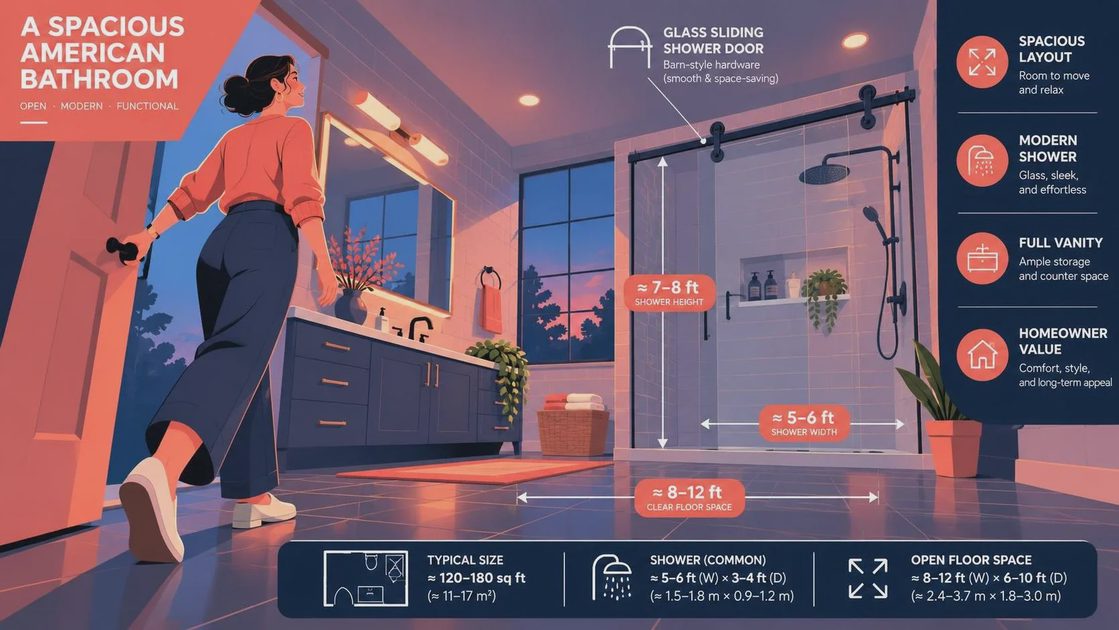
For a barn door shower door, compare those measurements with the manufacturer's allowable width and out-of-plumb adjustment. Out of plumb means a wall leans instead of standing perfectly vertical. A half-inch difference between the top and bottom of an opening is not something I'd expect every frameless system to conceal. If the measurements exceed the door's adjustment range, ask the installer about correcting the opening or ordering a suitable custom enclosure.
Also measure the flat surface on top of the curb. The bottom guide needs the minimum mounting width specified in the instructions. A rounded or narrow curb can leave nowhere solid to attach it. Check the curb's slope too: water should drain back into the shower, not toward the bathroom floor.
Plan the blocking before the tile goes up
The rail and fixed-panel attachments need secure anchoring. Before closing the walls, give the installer the exact door model and ask where the manufacturer calls for studs or solid blocking. Don't assume a plastic drywall anchor through tile is an acceptable substitute; follow the hardware instructions for the actual wall construction.
If the shower is already finished, locating suitable framing is part of the installation job. A pro can assess whether the specified fasteners and mounting locations will work. Drilling blindly through tile risks cracking it, hitting a pipe, or compromising the waterproofing.
The same caution applies at the curb. Fasteners driven through the top of a waterproofed curb can create a leak path. Discuss the door's mounting requirements with the waterproofing installer before construction. Don't improvise a curb attachment or assume a dab of silicone repairs a hole through the membrane.
A barn door shower door is usually heavy tempered glass. Have a qualified glass installer handle measuring and installation if you're uncertain about support or fit. Tempered glass cannot be cut or drilled to size after tempering, so a bad measurement can mean buying another panel.
Be honest about splashes and cleaning
A sliding glass enclosure is not an aquarium. Gaps around the moving panel, overlap between panels, and the bottom guide can all let water escape under the wrong conditions. The door's seals and layout help, but placement of the showerhead matters too.

Where the design allows, position the moving panel and showerhead so the spray isn't aimed directly at the opening between panels. Check which side the sliding panel occupies and whether the model can be installed in the orientation your bathroom needs. A handheld shower aimed at the seams can push water out even when normal use doesn't.
Ask what comes with the barn door shower door: side seals, a bottom sweep, splash guards, and handles aren't identical across models. Replacement seals and rollers are worth checking before purchase. An attractive bargain loses its shine when a small worn part means hunting down an entire hardware kit.
For cleaning, a quick squeegee after use reduces water spots. Use the glass and hardware maker's recommended cleaner, and skip abrasive pads. Coated glass can make maintenance easier, but it doesn't eliminate cleaning. Soap film still shows up, particularly around the overlap and bottom guide.
What should you budget?
A barn door shower door is only one line on the bill. Get a written quote that separates the enclosure, delivery, installation, removal of the old door, and any wall or curb repairs. Prices vary widely with glass thickness, opening size, hardware finish, local labor, and whether the enclosure is stock or custom.
For a stock enclosure, a rough planning allowance is several hundred dollars for the door and several hundred more for professional installation. Custom glass, difficult access, repair work, and premium hardware can push the total considerably higher. Get local quotes rather than treating a shelf price as the finished cost.
Before ordering, confirm who takes the final measurements and who owns the mistake if the glass doesn't fit. I also want the warranty terms in writing: glass breakage, finish damage, seals, rollers, and installation labor may be treated differently. A lifetime label alone doesn't tell you much.
Bottom line: buy the door that fits your finished opening and has a solid mounting plan, not the one with the fanciest rollers.
No notes yet — be the first to inscribe one.