
Cast iron tubs are the old-school bathroom fixture that refuses to disappear. There’s a reason for that. A properly installed tub feels solid, holds heat well, and can still look good after decades of daily use. I’ve pulled plenty of them out of 1920s row houses, and more than a few looked better under the grime than new tubs look after five years.
But cast iron tubs are not automatically the best choice. They are brutally heavy, expensive to move, and unforgiving when your bathroom floor or plumbing is already in rough shape. If you’re renovating an older American home, the right question isn’t whether these tubs are beautiful. It’s whether your house, budget, and installation plan can handle one.
Why cast iron tubs still earn their keep
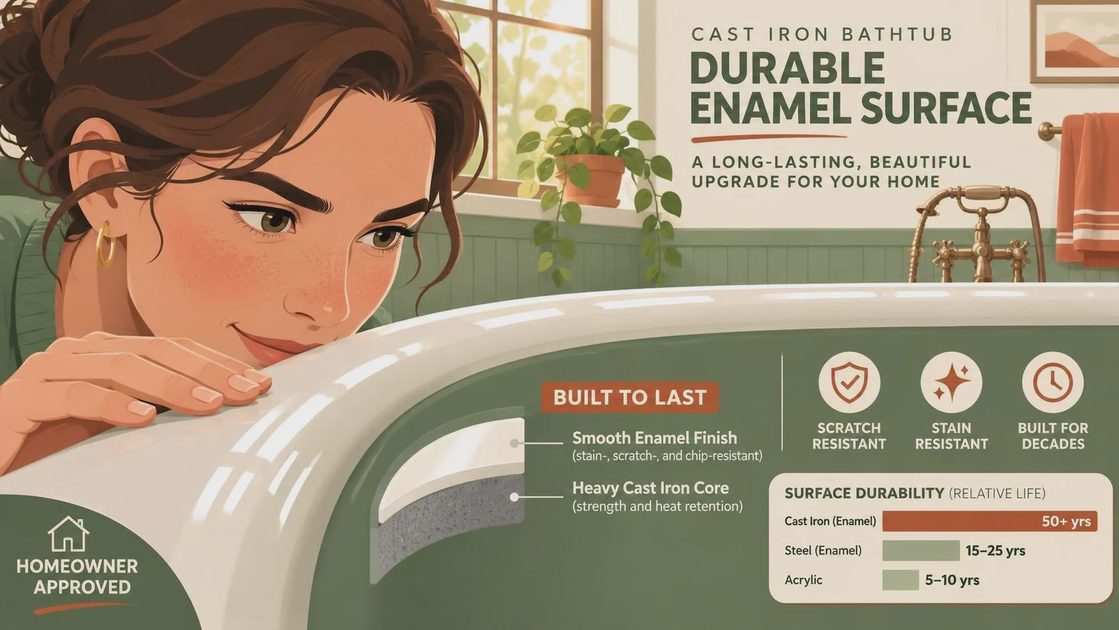
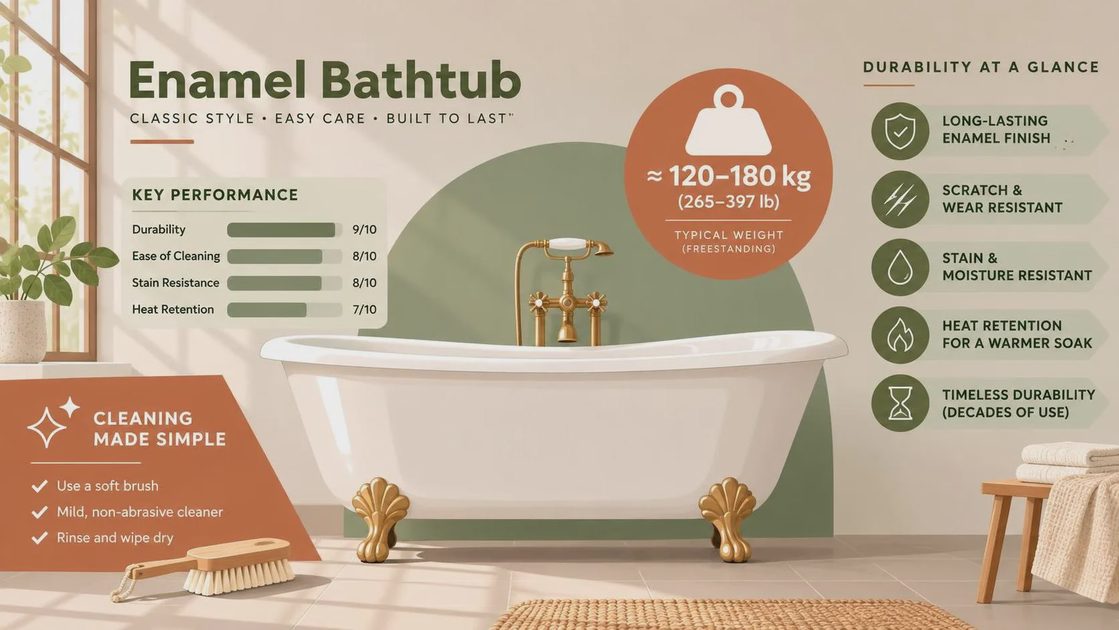
The main advantage is mass. A typical 60-inch cast iron tub can weigh roughly 300 to 500 pounds before water and a person are added. That weight gives it a stable, quiet feel that thin acrylic tubs simply do not match. You can step in, shift around, and never feel the floor flex beneath you.
Cast iron also holds heat better than steel or acrylic. It will still cool eventually, but the water temperature drops more slowly, which matters if you take a long bath instead of treating the tub like a laundry basin. The enamel surface is another strong point. Quality porcelain enamel resists scratching, staining, and everyday abuse from children, metal drain covers, and cleaning products.
Kohler and American Standard still sell new cast iron models, although the selection is smaller than it was years ago. A basic alcove tub commonly lands between $900 and $1,800 for the fixture alone. A deeper soaking model, apron-front design, or specialty finish can push past $2,500 quickly.
The catch is that the surface can chip. Once the enamel is damaged, water can reach the iron underneath and create rust around the chip. That is repairable, but it is not a problem you should ignore.
The weight changes the entire installation
I once helped remove a cast iron tub from a narrow second-floor bathroom in Fishtown. The tub had probably been installed before the walls were finished, because getting it out required breaking it into pieces with a sledgehammer. That was noisy, dusty work, and nobody in the house enjoyed it. Moving a new one in can be just as difficult.
Before ordering, measure the doorway, stair turns, hallway width, and bathroom entrance. A 60-inch tub may fit the room perfectly and still be impossible to maneuver through the house. Professional movers sometimes charge $300 to $800 for a difficult delivery, and that does not include removing doors or cutting drywall when the path is bad.
The floor needs attention, too. Most homes can support a properly distributed tub, but an older floor with water damage, undersized joists, or a sagging subfloor deserves inspection before delivery. Do not assume a layer of new tile will solve a structural problem. Tile follows movement; it does not correct it.
Cast iron tubs also need solid, level support. Depending on the model, the feet or bottom may bear on a mortar bed or carefully prepared floor. The installation instructions matter. I have seen tubs supported on a few random shims, which is a good way to create movement, cracked grout, and a drain that slowly works loose.
Cast iron versus acrylic and enameled steel
Acrylic is cheaper and easier to carry. A standard acrylic alcove tub might cost $300 to $900, and two people can usually move it without calling in a third set of hands. Acrylic also gives you more choices in modern shapes and sizes. Its weak points are flex, surface scratching, and a hollow feel when the installation lacks proper support.
Enameled steel sits between acrylic and cast iron. It is lighter and often costs $400 to $1,000, but it can feel cold and loud unless the installer uses insulation or foam beneath and around it. The enamel is durable, though a hard impact can chip it just like cast iron.
Cast iron tubs cost more up front, and labor can add another $700 to $1,500 depending on access, plumbing changes, tile work, and demolition. That price buys durability and a heavier feel, not a magical installation. If your bathroom is on a second floor with a narrow staircase, acrylic may be the smarter material even if cast iron is your favorite on paper.
For a rental, guest bath, or quick resale renovation, I usually would not spend extra on cast iron. For a primary bath in a house you expect to keep for ten or twenty years, the calculation is different.
Buying new or rescuing an old tub
Old cast iron tubs can be excellent, but “vintage” is not a quality inspection. Look closely at the drain area, overflow opening, feet, rim, and underside. Hairline cracks in the enamel are not always fatal, but rust bubbling along the bottom often signals a bigger repair. A tub with a badly damaged flange can require expensive refinishing or custom waterproofing work.
Refinishing usually costs about $400 to $1,000 for a professional job, depending on location and preparation. The result can look very good when the surface is properly stripped, repaired, sprayed, and cured. Cheap brush-on kits are another story. They tend to show brush marks, peel around the drain, and fail early if the surface was not prepared correctly.
When buying used cast iron tubs, ask how they were stored and whether they have been moved recently. Inspectors and plumbers will not be impressed by a beautiful tub that has no usable drain connection or has been patched around the feet. Keep money aside for new waste-and-overflow hardware, supply lines, leveling materials, and possibly a professional reglaze.
A new tub comes with fewer mysteries, but confirm that the model fits your rough opening. Some tubs marketed as 60 inches actually need more room for the apron, studs, or plumbing connections.
Waterproofing and plumbing details people miss
The tub itself is only one part of the assembly. The wall surround needs a real waterproofing system, not green drywall and a prayer. Cement board, a sheet membrane such as Schluter-Kerdi, or a liquid-applied system can work when installed according to its instructions. The important part is keeping water behind the tile from reaching the framing.
The tub flange must connect correctly to that waterproofing. The backer board should not create a ledge that dumps water behind the rim. Seal changes of plane with the manufacturer’s recommended sealant rather than assuming grout will stay watertight. Grout is not a substitute for a waterproof membrane.
Plan the valve and spout before the tub goes in. A tub that is difficult to access becomes a plumbing problem if the valve leaks later. I prefer keeping a serviceable access route whenever the layout allows it. Call a licensed plumber when moving supply pipes, changing drain locations, or working with old galvanized lines. A bathroom remodel is not the place to learn how to sweat copper over a finished ceiling.
My practical recommendation
Choose cast iron tubs when you value a quiet, stable fixture, plan to stay in the home, and have a clear delivery route. Budget at least $1,500 to $3,500 for the tub, delivery, installation, and related plumbing before tile and waterproofing. More complicated rooms can run higher.
Skip them when the floor is questionable, access is tight, or the budget depends on doing everything quickly. A well-supported acrylic tub is not a failure. It is often the responsible choice, especially in a second-floor bathroom where moving 400 pounds through a finished house creates unnecessary risk.
Before ordering, complete this checklist: measure every opening, inspect the subfloor, confirm the tub’s rough dimensions, price delivery, select the waste-and-overflow kit, and decide how the walls will be waterproofed. Get those details right and the fixture will serve you for years.
The bottom line is simple: cast iron tubs are durable, comfortable, and worth the money when the structure and installation plan support them. A bathroom built right once is a bathroom you forget about. That’s the point.


No notes yet — be the first to inscribe one.