
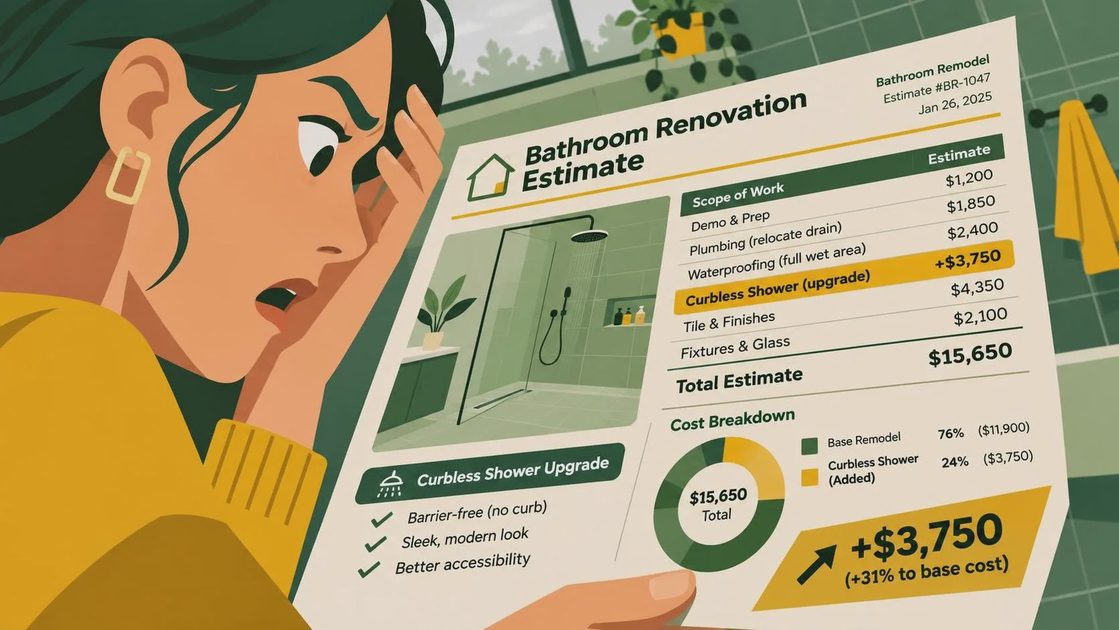
The curbless shower cost premium is commonly around $1,000 to $3,000 over a comparable shower with a curb, but difficult framing, concrete demolition, or plumbing changes can push the difference higher. That is the extra cost, not the price of the whole shower. In an older house, the number worth trusting is the one your contractor gives you after checking what is under the floor.
For a complete tiled shower, a rough planning allowance of $8,000 to $20,000 or more is reasonable in many markets. Size, local labor rates, tile selection, glass, and repairs can move that figure substantially. Compare two bids with the same footprint, finishes, fixtures, and scope; otherwise, you are comparing a basic shower with somebody else's dream bathroom.
What creates the curbless shower cost premium?
A shower floor needs to slope toward its drain. With a curb, the installer can build that slope above the bathroom floor and use the curb to contain water. Without one, the drain area usually has to start lower, or the surrounding bathroom floor has to come up. Making those surfaces meet cleanly takes planning and labor.
For a typical 1/4-inch-per-foot slope, a drain 3 feet from the farthest shower wall needs roughly 3/4 inch of vertical drop from that wall to the drain. The actual layout, drain requirements, and local code matter. That calculation also leaves out the thickness of tile, mortar, waterproofing, and the floor assembly below them.
The extra bill may include opening the subfloor, modifying the framing, moving a drain, waterproofing beyond the shower, and making the bathroom floor transition work. A linear drain can help with certain layouts, but it is not mandatory. A conventional point drain can work too, as long as the floor is properly shaped and the tile suits the slopes.
Why older floors can change the estimate
In a wood-framed house, the cheapest route is often one where the existing structure already gives the installer enough depth to create a recessed shower floor. Older homes do not always cooperate. Joists may be shallow, uneven, notched by previous work, or running in an inconvenient direction.
Do not let anyone casually cut or notch joists to gain height. Structural limits apply, and a contractor may need an engineer's plan to recess or reinforce the floor safely. That is where a modest premium can become several thousand dollars more. Ask whether the estimate includes structural work or merely says it will be priced after demolition.
A concrete slab presents a different problem: lowering the shower area can mean cutting and removing concrete, then dealing with the drain and slab repairs. Existing plumbing, slab conditions, and local requirements determine how much work that takes. A site visit alone may not reveal everything; a sensible contract explains how concealed conditions will be handled.
Raising the bathroom floor instead of recessing the shower is another option, but it can create a step at the doorway and affect the toilet flange, vanity, and door clearance. If the goal is easier access, moving the obstacle to the bathroom entrance rather misses the point.
Waterproofing and drainage are not upgrade fluff
The tile and grout are not the waterproof layer. A proper assembly directs water to a drain through a compatible waterproofing system, with careful treatment at seams, corners, penetrations, and the drain connection. In a curbless layout, the bathroom floor outside the shower deserves particular attention because there is no raised barrier at the entrance.
Ask how far the waterproofing extends, how it connects to the drain, and whether the installer follows the selected system's instructions. Schluter, LATICRETE, and USG all offer shower waterproofing systems; the important thing is that the components work together and are installed as a system. Mixing whatever happens to be on the truck is not a plan.
A flood test before tile goes down is a useful quality check, and it may be required by the local inspector. Ask who performs it, when it happens, and whether inspection is included. A passed test is not a lifetime guarantee, but finding a leak before the tile is installed beats finding it through the ceiling below.
Where the money goes on a bid
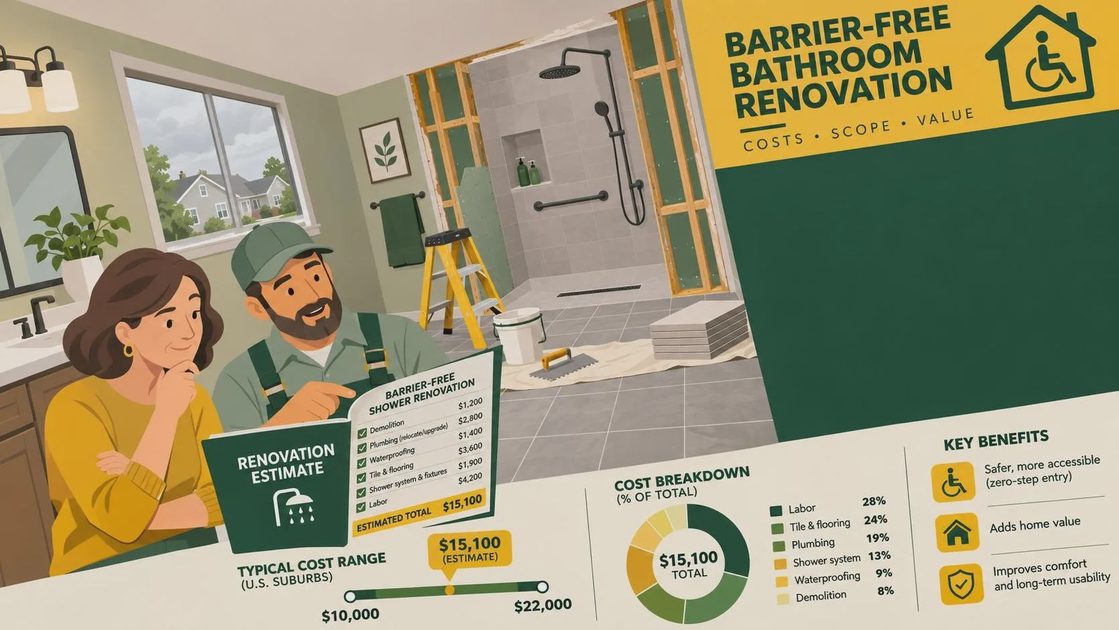
Have the contractor separate the base shower work from the curbless-specific work. You want to see demolition, framing or slab modification, drain and plumbing changes, waterproofing, tile installation, glass, permits, and finish repairs. Some contractors group line items differently; the point is to understand what is included, not demand an accounting textbook.
Watch the allowances. If one bid includes a bargain tile allowance and another includes the actual tile you chose, their totals are not directly comparable. The same goes for drain finish, glass enclosure, and repair of the ceiling below if access is needed. Sales tax, disposal, and permit fees should be addressed too.
Ask for a written price or a defined allowance for likely concealed repairs, plus a process for approving changes. No honest contractor can promise there is no rotten subfloor before opening it. They can explain the hourly rate or pricing method and get your approval before doing extra work.
Is the curbless shower cost premium worth paying?
It can be, especially if a low-obstacle entrance matters to your household or you plan to stay in the home. But curbless does not automatically mean accessible. Door width, usable floor space, controls, grab-bar backing, shower seating, and a slip-resistant surface all matter. A wheelchair user may need a layout designed around the chair and transfers, not just a missing curb.
You can control the price by keeping the shower near existing plumbing, choosing a straightforward layout, and selecting readily available tile and fixtures. Do not save money by deleting the waterproofing or structural work. If the floor cannot be recessed within budget, a properly built low curb may be a better answer than a compromised curbless installation.
Bottom line: pay for the floor and waterproofing work first, then decide whether the clean entrance is worth the premium in your particular house.

No notes yet — be the first to inscribe one.