If you're researching basement bathroom addition cost, you're probably seeing quotes that swing from $15,000 to $50,000 and wondering who's lying. I've framed, plumbed, and tiled more basement baths than I can count, and the truth is that price range is real. The difference comes down to what's already under your concrete slab and what kind of fixtures you want.
The Real Number: What a Basement Bathroom Addition Really Costs
Let's get to it. A typical basement bathroom addition cost in the U.S. lands between $25,000 and $35,000 for a finished, fully code-compliant full bath. That's for a 35 to 50 square foot space with a toilet, sink, and a walk-in shower, including labor, materials, and permits. If you're lucky enough to have plumbing stubbed into the slab already, you can get that down to around $15,000. If you're cutting concrete, running new drain lines, and adding an ejector pump, you'll climb toward $40,000 or more.
That basement bathroom addition cost isn't a game. There was a Fishtown row house a few years back where a handyman quoted $22,000 and planned to tap into a 2-inch vent stack and skip the pump. That's a recipe for a mess you'll never forget. The licensed plumber who did it right charged $9,000 just for the waste and vent line.
Why Basements Cost More Than First-Floor Baths
A first-floor bathroom drains with gravity. The plumber runs a vent and waste line down to the main stack, and it all flows out. A basement is below the sewer line, so nothing flows without help. You need a sewage ejector pump to grind and lift waste up to the main line. A good ejector basin, pump, and float switch installed will set you back $1,500 to $3,000. That's the price of doing it right.
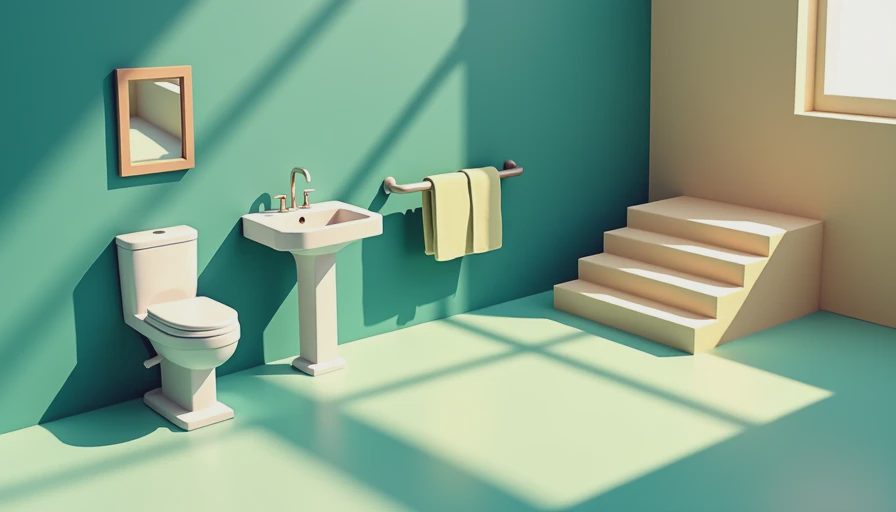
Then you have the concrete. Cutting a 4-inch trench through a 4-inch slab is loud, dusty work, and it has to be patched properly with concrete mix and re-bar. That alone can add $2,000 to the bottom line. So a basement bathroom addition cost runs nearly double what a first-floor addition of the same size would cost.
Where the Money Goes: A Dollar-by-Dollar Breakdown
Let's talk real numbers for a mid-range full bath with a walk-in shower, no soaking tub and no smart toilet. The plumbing rough-in, ejector pump, and waste/vent lines run $6,000 to $12,000. Electrical, including a new GFCI, lighting, and a vent fan, comes in at $1,500 to $3,000. Framing, drywall, and paint are $3,000 to $5,000. Waterproofing the shower with a membrane like Schluter Kerdi, not felt paper, costs $1,000 to $2,000. Tile materials and labor run $3,500 to $6,000. The toilet, sink, vanity, mirror, and mid-line fixtures from Delta or Moen come in around $2,000 to $4,000. Permits and inspection fees are $400 to $1,200.
Add that up and you're at roughly $17,500 to $33,200, and the extras always creep in. I've never seen a project close out under the low quote. Budget 10 to 15 percent over as a surprise fund for the thing you find when you break the slab.
How to Cut Cost Without Cutting the Wrong Corner
The biggest lever on basement bathroom addition cost is the fixture package. You can spend $1,200 on a smart toilet or $300 on a solid basic toilet and it'll flush either way. Spend your money on the things you can't change later: the waterproofing, the ejector pump, and the vent piping.

For the pump, don't buy the cheapest one at the supply house. I've installed more Zoeller M53s than any other model, and they're still running after 20 years. Liberty Pumps makes a solid alternative. If a contractor tries to sell you a $90 utility pump in a drain basin, show them the door.
Do the demo and painting yourself if you're able. Tearing out old shelving and moving boxes will save you $500 to $1,000. Don't touch the plumbing, don't touch the electrical, and don't cut the slab yourself unless you've done it before. A jackhammer can rupture a water line or hit a hot wire, and that's how a $30,000 project becomes a $60,000 project.
The Hidden Costs That Blow Up Your Budget
The gotchas start before you ever pick up a hammer. If your basement has any moisture problems, you'll need to fix the grading, add a sump pump, or install a dehumidifier before you start, or your new shower will smell like a swamp in a year. That's $1,000 to $5,000 you didn't plan for.
Local codes can bite too. In Philadelphia, where I work, you need a separate vent stack and a check valve on the ejector line. If your contractor doesn't know the code, you'll fail inspection and pay for the rework. Ask about this before you sign the contract.
The Bottom Line
Call three licensed plumbers and get a contracted bid based on a clear scope. Look at the last three basement bathrooms they built. Ask how they handle the ejector vent and whether they've ever had a call-back on a flange leak. A bathroom built right once is a bathroom you forget about. That's the point.
The honest number? For a full basement bathroom you'll use every day, budget $30,000. You can do it for less, but you'll be on the phone with me in five years. And I'd rather never get that call.

No notes yet — be the first to inscribe one.