
If you want the best bathroom flooring, start by forgetting the showroom display. A bathroom floor has to survive wet feet, toilet overflows, dropped shampoo bottles, muddy kids, and a subfloor that may have been installed before you were born. Pretty matters, but water management matters more. I have repaired enough cracked tile and swollen flooring to know that the material is only half the job. The other half is preparation.
For most American homes, my first choice is quality porcelain tile installed over a stiff, properly prepared floor. It handles water, cleans easily, comes in convincing wood and stone looks, and can last for decades. That does not mean porcelain is automatically the best bathroom flooring for every house. A second-floor half bath, a rental, and a 1920s row house with a bouncy floor may need different answers.
Porcelain tile is the dependable default
Porcelain tile is dense, hard, and rated for wet areas when you buy the right product. Look for a floor-rated tile with a textured or matte surface rather than a polished tile that turns into a skating rink when your child steps out of the tub. Twelve-by-twenty-four-inch tiles are popular, but smaller formats can be smarter on an uneven older floor because they follow minor changes in the surface without leaving hollow corners.
Material cost commonly lands around $3 to $8 per square foot for solid midrange porcelain. Installation can add $8 to $18 per square foot after mortar, underlayment, grout, layout, and labor. A 50-square-foot bathroom can therefore become a $550 to $1,300 flooring project before the toilet is removed or the subfloor is repaired.
Brands such as Daltile, American Olean, Marazzi, and MSI have plenty of usable options. I would rather install a plain Daltile matte porcelain over a well-prepared floor than an expensive imported tile over plywood that flexes. The best bathroom flooring still fails when the base underneath moves.
The subfloor decides whether tile survives
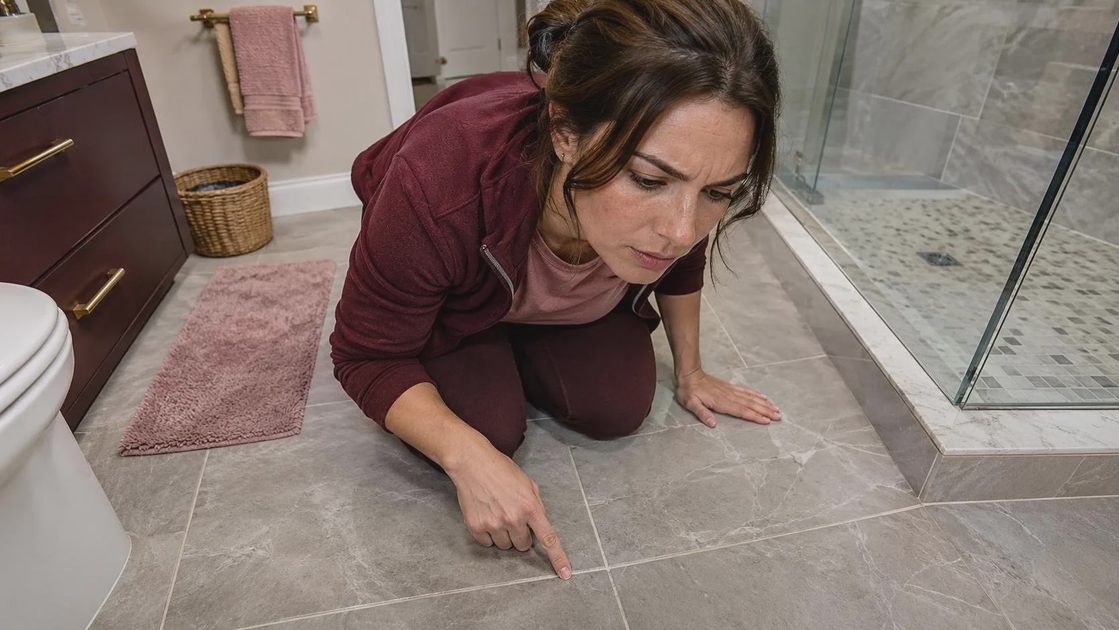
Here is where many renovation budgets go sideways. Tile is rigid. Wood framing moves. If the floor feels springy when you walk across it, adding cement board and tile will not cure the problem. It simply hides the movement until grout cracks or a tile starts rocking under your heel.
In an older home, I check for water damage around the toilet, tub, and exterior wall. Soft plywood, darkened edges, loose fasteners, and a toilet that shifts are warning signs. Remove damaged material and fix the leak before installing anything. Depending on access, a repair might cost $150 for a small patch or several hundred dollars when joists and plumbing are involved.
For a sound wood subfloor, I typically use a tile underlayment system such as Schluter-DITRA or cement backer board installed according to its instructions. The goal is not to make the floor waterproof by wishful thinking. Seams, corners, and plumbing penetrations still need proper treatment. In a bathroom with frequent splashing, an uncoupling membrane gives the tile assembly a better chance against small movements.
When luxury vinyl makes more sense
Luxury vinyl plank and luxury vinyl tile are practical choices when speed, comfort, or a limited budget matters. Good waterproof LVT is warmer and softer underfoot than porcelain, and many products install over a properly flat surface without mortar. That makes it attractive for a half bath or a bathroom where the existing floor is stable but not ideal for tile.
The catch is the word flat. Vinyl can be waterproof while the floor underneath is not. A hump, dip, or ridge telegraphs through the finished surface and can separate joints. Sheet vinyl avoids some of those seams, but the installation has to be precise around the toilet and baseboards. I have seen cheap click flooring swell at a poorly sealed tub edge, so do not treat “waterproof” on the carton as permission to leave standing water everywhere.
For LVT, plan on roughly $2 to $6 per square foot for material, with total installed costs often around $5 to $12 per square foot. Brands including CoreLuxe, Lifeproof, Shaw, and Karndean offer different construction levels. I favor a thicker wear layer, a stable locking system, and a product with matching trim rather than the cheapest plank in the aisle. LVT can be the best bathroom flooring for a quick refresh, but tile is usually the longer-term bet in a full renovation.
Materials I would approach carefully
Natural stone looks great in a sample board and can be a maintenance headache on a bathroom floor. Marble scratches and etches, slate can have uneven faces, and porous stone needs sealing and sensible cleaning. If you love the look, porcelain that imitates marble or slate usually gives you the appearance without the annual fuss. Large polished stone tiles are especially risky around a tub or shower entrance.
Laminate is another material I would generally skip in a full bathroom. Some products are marketed as water-resistant, but a leak at the toilet flange or a puddle beside the tub can reach the core and cause swelling. Solid hardwood belongs in the same conversation. It can work in carefully managed powder rooms, but bathrooms with children and frequent splashing are not where I would spend the money.
Peel-and-stick tiles have their place in a temporary rental refresh, not beneath a toilet in a busy family bathroom. The adhesive depends heavily on a clean, dry, smooth surface, and future removal can leave a mess that costs more than the original savings.
Make the floor safer and easier to clean
The best bathroom flooring is not necessarily the tile with the most dramatic pattern. Choose a surface that gives wet feet some grip and does not demand a toothbrush for every cleaning. Matte porcelain with a subtle texture is a strong middle ground. Very rough tile traps hair and soap; very smooth tile becomes slippery.
Grout color also matters. Bright white grout shows every bit of dirt around a toilet and vanity. A light gray or warm gray hides normal bathroom life without making the room look dingy. Use a quality cement grout or an appropriate premixed grout, follow the joint-width requirements, and seal cement grout when the manufacturer calls for it. Sealer does not make bad grout waterproof, and it will not fix gaps at the tub. Those changes of plane need flexible sealant, not rigid grout.
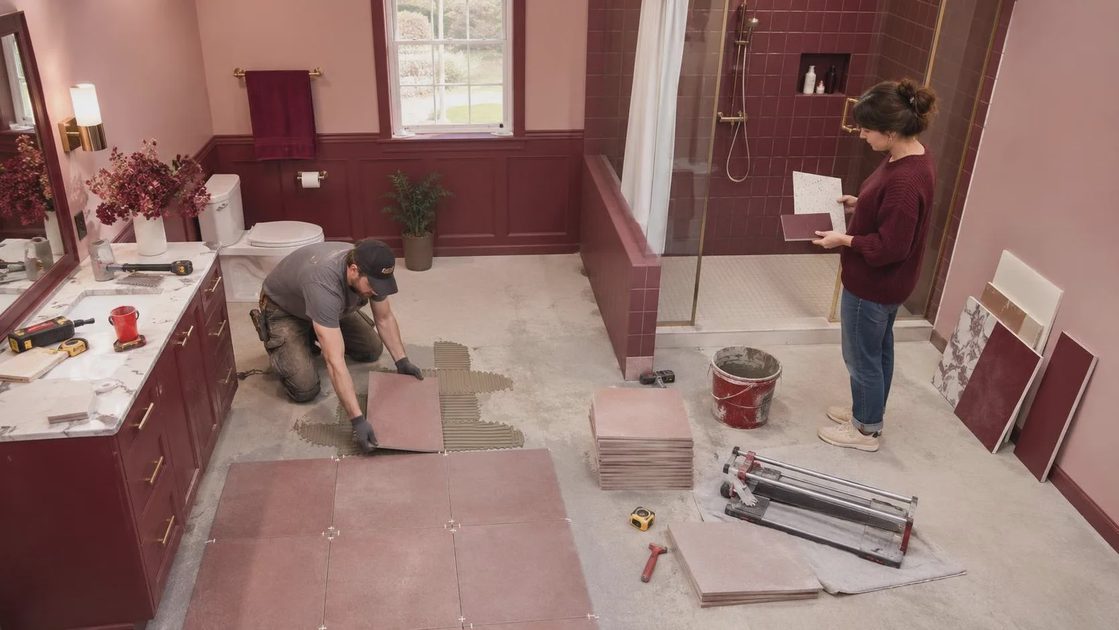
Think about layout before spreading mortar. Centering a full tile on the most visible wall often looks better than leaving a skinny sliver beside the vanity. Keep cut edges under cabinets when possible, but never create tiny pieces around the toilet just to save one tile. A clean layout is faster to install and easier to live with.
A practical buying checklist
Before you buy the best bathroom flooring for your project, measure the room and add about 10 percent for cuts and breakage. Add more for a diagonal pattern, herringbone layout, or tile with a strong pattern that must be matched. Buy the same production lot when possible because color and texture can vary between batches.
Check the tile’s floor rating, thickness, recommended mortar, and required grout width. Bring home two or three samples and look at them beside the vanity, wall color, and bathroom lighting. Store boxes flat and dry. For vinyl, inspect the locking edges and read the installation requirements for expansion gaps, toilets, and tubs.
Also budget for the unglamorous parts: a new toilet seal, quarter-round or baseboard, transition strips, underlayment, leveling compound, and disposal fees. A flooring quote that only lists tile and labor is not a complete quote. Ask who removes the toilet, who repairs the subfloor, and who reconnects the fixture.
My bottom-line recommendation
For a main bathroom or a bathroom receiving a full renovation, I would install matte porcelain tile over a properly prepared and reinforced floor. That is the best bathroom flooring combination of durability, water tolerance, cleaning ease, and resale-friendly appeal. For a sound half bath or a quick update, quality LVT is sensible and easier on the knees. I would spend less on decorative trim before I would spend less on subfloor preparation.
There was a row house in Fishtown where the owner wanted bargain laminate over a soft section near the toilet. We opened the floor, found old water damage, replaced the weak plywood, and installed simple porcelain instead. It was not the flashy part of the renovation, but five years later the floor was still tight and the grout lines were clean. That is the result worth paying for.
A bathroom built right once is a bathroom you forget about. That’s the point.
No notes yet — be the first to inscribe one.