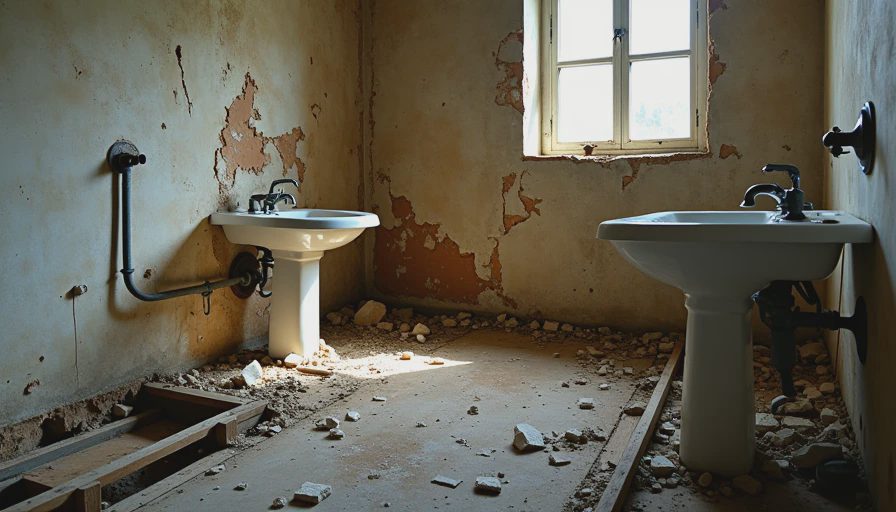
Why Old Houses Fight Back
If you own a pre-1980 house — especially those charming brick row homes here in South Philly — congratulations. You also own a bathroom that’s probably been waiting decades to ruin your renovation budget. After tearing out hundreds of these spaces, I can tell you: the problems are predictable, but only if you know what to look for.
Most homeowners walk in expecting a simple cosmetic update. They see ugly tile and think “new tile, done.” Reality hits when the first sledgehammer swing reveals what’s been hiding for 60 years.
A bathroom built right once is a bathroom you forget about. That’s the point. But you can’t build it right if you don’t know what you’re actually dealing with.
Here are the five problems I see in nearly every old-house bathroom reno.
1. Rotten or Flexing Subfloors
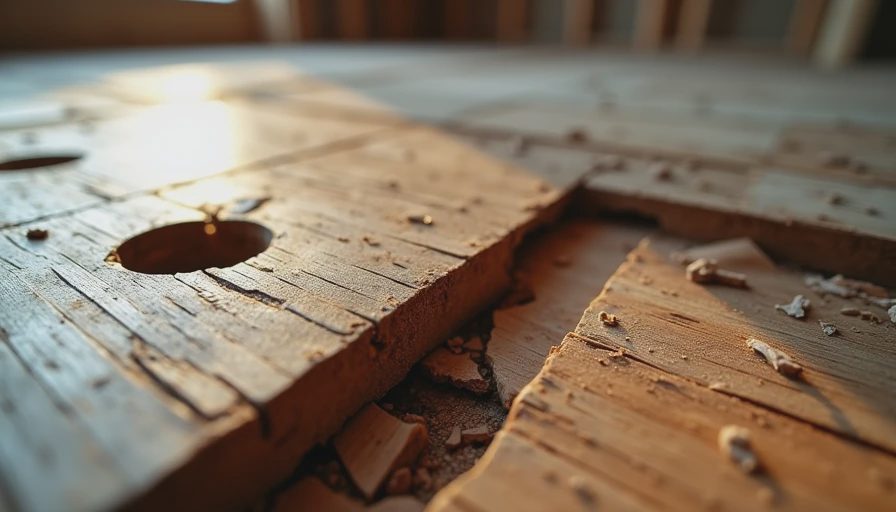
This is the big one. You pull up the old vinyl or tile and discover the subfloor feels like a trampoline or is soft and spongy. In 1920s houses, it’s often original pine boards that have been soaked by decades of slow leaks.
I once had a job in Queen Village where the entire floor joist had rotted from a leaking toilet flange. The homeowner thought they just needed new tile. We ended up sistering joists and replacing a 6x8 foot section of subfloor.
What to do:
Walk the floor before demo. Any bounce? Any squeaks?
After removing the old flooring, check for soft spots with a screwdriver.
Budget for 3/4" plywood replacement and construction adhesive + screws. Don’t skimp here — tile hates movement.
2. Ancient Plumbing That’s One Hammer Away From Disaster
Cast iron drains. Galvanized pipes. Those weird “Chicago” style valves from the 50s. Old houses are full of plumbing that looks like it belongs in a museum.
The worst is when you discover the shower pan drain was installed incorrectly decades ago and has been leaking into the ceiling below for who knows how long. Black mold, sagging drywall, and that unmistakable smell.
Pro tip: Take photos of all plumbing before you rip it out. Measure pipe locations. Nothing worse than realizing your new vanity doesn’t line up with the old drain.
3. Lead Paint and Asbestos — The Invisible Killers
Pre-1978 houses almost certainly have lead paint. Pre-1980 flooring and tile mastics often contain asbestos. I’m not here to scare you, but I am here to make you test.
I’ve seen homeowners sand old paint without protection. Don’t be that person. Get a lead test kit and, if you’re disturbing old tile or linoleum, consider professional asbestos testing. Better safe than in a hazmat suit wondering why you’re coughing up dust.
4. Out-of-Level Walls and Floors
Old houses settle. Walls bow. Floors slope. Trying to tile a shower with walls that aren’t plumb is a special kind of torture.
I learned this the hard way early in my career. Thought I could “make it work” with extra thinset. The tile looked fine for a year, then grout started cracking and the whole wall sounded hollow.
Solution: Use a long level and straight edge during prep. Build out with Kerdi board or cement board as needed. A little extra work here saves massive headaches later.
5. The Abandoned Razor Blade Collection (And Other Surprises)
This one’s half joke, half serious. Behind old tile you’ll find:
Abandoned wiring
Random screws and nails
Old razor blades (seriously, multiple times)
Mouse droppings
Layers of wallpaper glued directly to drywall
And once, an entire 1970s Playboy magazine stuffed in the wall for insulation
Demo day is part archaeology, part dumpster diving. Wear good gloves and a respirator. You never know what you’ll find.
How to Approach Demo Day Without Losing Your Mind
Protect what you’re keeping — Cover the tub with moving blankets and plywood if you’re reusing it.
Work top-down — Ceiling first, then walls, then floor.
Rent the right tools — Oscillating multi-tool, decent shop vac, and a good sledge.
Have a disposal plan — Old tile and drywall are heavy. Book a dumpster or bag service early.
Document everything — Photos before, during, and after. Future you will thank you.
The Real Cost of Ignoring These Problems
I’ve watched homeowners try to skip proper prep to save a few thousand. Six months later they’re calling me back because their new shower is leaking. Fixing it after the fact always costs more.
Spend the money on good prep work. It’s not sexy. You won’t post it on Instagram. But it’s what separates a bathroom that lasts from one that becomes an expensive lesson.
If you’re planning a reno in an old house, start with a thorough inspection. Walk every inch. Poke, prod, and measure. Know what you’re getting into before you start swinging hammers.
Got photos of your own bathroom demolition horror story? Drop them in the comments. I’ll tell you what I see — no sugarcoating.

No notes yet — be the first to inscribe one.