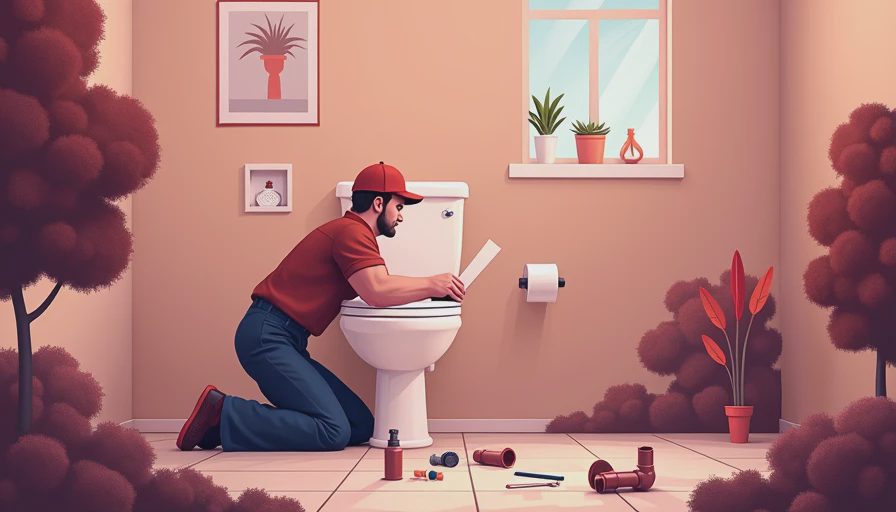
If you're staring at a toilet flange glued to the outside of the pipe and wondering how to remove toilet flange glued to outside of pipe without wrecking the entire drain assembly, I've got good news and bad news. The good news is it can be done in under an hour with the right tool. The bad news is you can't twist it off, and if you pry it with a crowbar, you'll crack the hub and turn a ten-minute job into a two-part repair. I've seen it happen more times than I can count, including a row house in Fishtown where a homeowner spent two weekends "wiggling" a flange until he cracked the stack. We had to open the basement ceiling and replace four feet of pipe. Don't be that guy.
Why the Outside-Glued Flange Is a Pain in the Ass
In the 1980s, when PVC was replacing cast iron in residential drainage, a lot of plumbers used flanges that glued over the outside of a 3-inch pipe. The flange hub slides down over the pipe, and solvent cement melts both surfaces into one solid piece. Once that weld cures, there is no unscrewing it, no heating it apart, and no prying it off. The joint is stronger than the pipe itself.
So the removal method is to cut the flange away without cutting the pipe. That sounds simple, but it's easy to get wrong. A hacksaw won't fit in the gap. A knife won't scratch a cured solvent weld. You need a power tool with a small blade or a rotary cutter that can carve a relief slot into that hub without digging into the pipe.
Tools You'll Need (and What You Can Skip)
For this job, my go-to is a Milwaukee M12 oscillating multi-tool with a carbide blade. It fits between the floor and the flange ring, and it chews through PVC without binding. An angle grinder with a 4-1/2 inch cutoff wheel works, but it throws hot plastic everywhere and it's easy to overshoot. A reciprocating saw is too aggressive — save it for demo work.
You'll also want a rotary tool like a Dremel with a cutoff wheel, a stiff putty knife, a flathead screwdriver, and a hammer. And keep a replacement flange close by, because the old one isn't going back on.
Skip the heat gun. I don't care what a forum says; direct heat on PVC makes it soft and weak, and you'll end up crushing the pipe while you're "loosening" the glue. I'll show you how to remove toilet flange glued to outside of pipe with a $40 tool and a little patience, no torches needed.

Step-by-Step: How to Remove a Toilet Flange Glued to the Outside of a Pipe
Here's how to remove toilet flange glued to outside of pipe without cutting the pipe itself. Take your time and follow the order below. If you have access from a basement, hold the pipe steady with one hand from underneath — it helps.
Step 1: Cut the flange ring in half. Use the oscillating tool with a sharp carbide blade to cut through the flat part of the flange, just above the hub. Two cuts on opposite sides work best. This relieves the pressure from the ring itself.
Step 2: Work the two halves off with a chisel or putty knife. The ring will usually pop free or you can rock it off the hub with a flathead screwdriver.
Step 3: Now you're left with just the collar glued to the pipe. This is the part that tests your patience. Take the Dremel with a cutoff wheel and cut a thin slot lengthwise down the collar, from the top edge down to the floor. Stop as soon as you see the pipe's surface. You want to cut through the collar, not into the pipe.
Step 4: Stick a flathead screwdriver in the slot and tap it gently with a hammer. The collar will crack along that line. Repeat on the opposite side if needed. Then peel the collar away using a chisel. It's part grinding, part cracking, and it works every time.
What If the Pipe Gets Damaged?
Nobody cuts a pipe perfectly the first time. A light scratch on the outside of the PVC is usually fine. A deep groove or crack is not. If you go too deep, inspect the pipe carefully. If the crack runs all the way through, you've got two options.
Option one: cut out the damaged section and glue in a coupling and a short piece of pipe. This is the old-school fix, and it means you'll be working under the floor with a saw — not fun, but reliable. Option two: use an inside-fit replacement flange like the Oatey Twist-N-Set or the Fernco ProFlex. These slide down the inside of the existing pipe and seal with a rubber gasket. No glue, no permanent bond, and they hold a toilet firmly. You can pick one up for $12 to $18 at Home Depot, and they're a legit fix if the outer pipe surface is too chewed up for a new glue-on flange.
The Reason Most DIYers Mess This Up
If there's one mistake that turns this into a catastrophe, it's using too much force. I've watched a guy try to chisel a flange off by hammering straight into the hub. He cracked the pipe in half and had to cut open the ceiling below to fix it. The right way is always the relief cut. Once you cut that slot, the flange splits along the line of least resistance. That's the trick.
Another common mistake is trying to use a drill with a hole saw to "grind" the flange off. That removes more pipe than flange, and you lose the flat surface you need for a new flange. Don't do it. Stick with the oscillator and the Dremel.
My Bottom Line
So if you need to know how to remove toilet flange glued to outside of pipe, follow these steps and don't skip the relief cut. The job takes about 45 minutes, it costs nothing more than a replacement flange if you're careful, and it saves you from calling a plumber for a $300 emergency. A bathroom built right once is a bathroom you forget about. That's the point.


No notes yet — be the first to inscribe one.