If you are asking how much to put in a bathroom in the basement, the short answer is usually more than people hope and less than a full custom upstairs bath with fancy tile everywhere. In an older house, the big swing factors are drainage, ceiling height, and how much plumbing already exists. I have seen clean projects land around $12,000 to $18,000, plenty of solid midrange jobs hit $20,000 to $30,000, and tougher basement conversions run past $35,000 once the digging and pumping start.
The good news is that most homeowners do not need the most expensive version. They need a basement bath that drains, stays dry, and does not turn into a mildew factory. That means spending money where it matters: rough plumbing, waterproofing, ventilation, and a tile setup that can survive a basement. Fancy mirrors and trendy brass fixtures can wait until the bones are right.
How much to put in a bathroom in the basement starts with the rough-in
The rough-in is where the budget gets real. If the basement already has a sewer line nearby and the toilet can tie in with a gravity drain, you are ahead of the game. If not, you may need a sewage ejector pit and pump. A Zoeller or Liberty Pumps system can run roughly $800 to $2,000 for the equipment, and installed cost often lands between $2,500 and $5,500 once you add piping, venting, and labor.
That is before finishes. A basic basement bathroom with a toilet, small shower, and vanity can be built for roughly $8,000 to $15,000 if the plumbing is friendly and the room is already framed. Add a tile shower, better fixtures, and a little drywall repair, and you are usually in the $15,000 to $25,000 zone. If you are cutting concrete, moving a main line, or dealing with low beams and a tight stair run, the number can climb fast.
I tell homeowners to budget in layers. First, the plumbing and drainage. Second, the waterproofing and ventilation. Third, the finishes. If the first layer eats the whole budget, you do not have a basement bathroom project. You have a headache with a toilet in it.
The hidden costs that turn a fair quote into a painful one
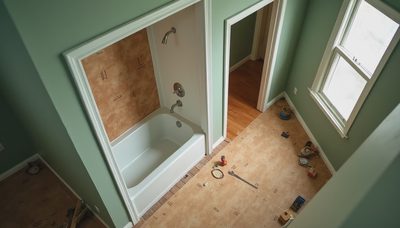
Basements hide problems well. Once the demo starts, you find old asbestos tile, crooked slab, rotten sill plates, or a ceiling so low a standard vanity feels like a helmet. Electrical often needs work too. A new bathroom should usually get a dedicated GFCI-protected circuit for the receptacles and a proper exhaust fan, not some weak fan that just stirs damp air around.
Flooring is another trap. If the slab is uneven, you may need self-leveler, patch work, or a sleeper system before tile can go in. Schluter Ditra, Schluter Kerdi-board, or a Wedi system can make a basement bath more durable, but you are paying for the materials and the labor to install them correctly. A decent fan from Panasonic or Broan is not cheap either, but it beats replacing moldy drywall in two years.
Permits can matter. In many places, adding a bathroom means at least plumbing and electrical permits, and sometimes mechanical work too. I have seen homeowners try to save $600 on permits and then spend three times that fixing inspection problems. That is penny-wise, pound-foolish stuff.
Where to spend and where to save without building junk
Spend on waterproofing, drainage, and the shower base. Save on the vanity, mirror, and some of the trim. A simple James Martin or IKEA vanity can look fine if the room is laid out well. A stone top is nice, but a good laminate top or a modest quartz remnant keeps the project from getting stupid expensive.
For fixtures, Delta, Moen, and Kohler all make solid stuff in the middle of the market. You do not need a $700 faucet to wash your hands. What you do need is a valve that will not act up in five years and a shower trim that has replacement parts available when something finally wears out. That matters more than shiny packaging.
Tile is where a lot of people overspend for no real gain. A $4 to $8 per square foot ceramic tile can look sharp in a basement bath if the layout is clean and the grout lines are tight. You do not need hand-made imported tile just because a showroom told you so. Spend the extra money on a better waterproofing system, a proper shower niche, and a floor that does not telegraph every hump in the slab.
If the bathroom is small, a compact shower with a glass panel often beats a full curtain setup. It feels bigger, drains better, and cleans easier. That is money well spent.
A job-site example from an older row house
There was a row house in South Philly where the owners wanted a half bath in the basement first, then a shower later. Smart move. We found a usable drain line, but the ceiling was low and the slab needed a little trenching to get the toilet to work right. The half bath landed around $11,500 with plumbing, drywall, paint, a simple vanity, and a good toilet. If they had insisted on the shower at the same time, the project would have jumped into the low $20,000s because the waterproofing and tile work would have doubled the labor.
That is the part a lot of people miss. The square footage is not what drives the bill. The complications do. A tiny basement bathroom with ugly access can cost more than a larger upstairs bath if the drain path is ugly and the slab fights you every step of the way.
Another case: a homeowner wanted polished marble-look porcelain, heated floors, and black fixtures everywhere. Nothing wrong with that look, but the basement had no drain nearby and the floor was out of level. By the time we priced the pump system, floor prep, and tile labor, the budget was approaching $30,000 before the pretty stuff even started. We trimmed the finish package, kept the layout simple, and got the project down to a number that made sense.

How much to put in a bathroom in the basement when you want a clean, lasting result
If you want a bathroom that stays out of your life, aim for the middle of the market and leave room for surprises. For a straightforward basement bath in an older home, I would usually tell someone to start thinking in the $15,000 to $25,000 range. If the plumbing is easy and the finishes are modest, you can land below that. If the drain needs help, the slab needs work, or you want a tiled shower with better materials, plan on the higher end or a little beyond it.
Get two or three bids, but compare the same scope. One quote that skips waterproofing or leaves out venting is not cheaper. It is incomplete. Ask what system they are using for the shower, who is handling the electrical, and whether the finish work includes patching and paint or just rough trades. That is where the real differences show up.
If you are still trying to figure out how much to put in a bathroom in the basement, start with the drain path, then the waterproofing, then the finishes. Do that in the right order and you will get a room that works, dries out properly, and does not need a rescue call in two years. A bathroom built right once is a bathroom you forget about. That’s the point.

No notes yet — be the first to inscribe one.