I've lost count of how many toilets I've set, but it's somewhere north of 400. And the most common rookie mistake I see in older homes is a flange sitting too high or too low. The question "how high can a toilet flange be above the floor" comes up on every renovation where the flooring gets changed. So here's the straight answer from someone who's scraped more wax than a candle factory.
A toilet flange should sit about a quarter inch above the finished floor. That's the sweet spot. The maximum you want to see is a half inch. Anything higher than that with a standard wax ring and you're asking for a rocking toilet, a leaky seal, or a cracked pedestal. That's the short version.
What the Code Actually Says
The plumbing codes I work under here in Philly don't spell out a single number for maximum flange height. They say the flange has to be "at or above" the finished floor. The old rule of thumb from the manufacturers is 1/4 inch, and most inspectors are happy with anything from flush to a half inch. But let's be real: if you're installing a new flange over a tiled floor, you want it level with the tile or slightly above it. If the flange is recessed below the tile, you're creating a drain that will collect water and eventually smell like a swamp.
The practical question isn't what the code says. It's what the wax ring can handle. A standard wax ring is about an inch thick when new, and it compresses down to something like a half inch when you set the toilet. If your flange is already a half inch above the floor, you've used up the entire compression before the toilet base even touches the tile. That means no seal pressure against the horn, and the toilet will rock. So when someone asks me how high can a toilet flange be above the floor, my answer is: no more than a half inch, and a quarter inch is ideal.
Why Flanges End Up Too High
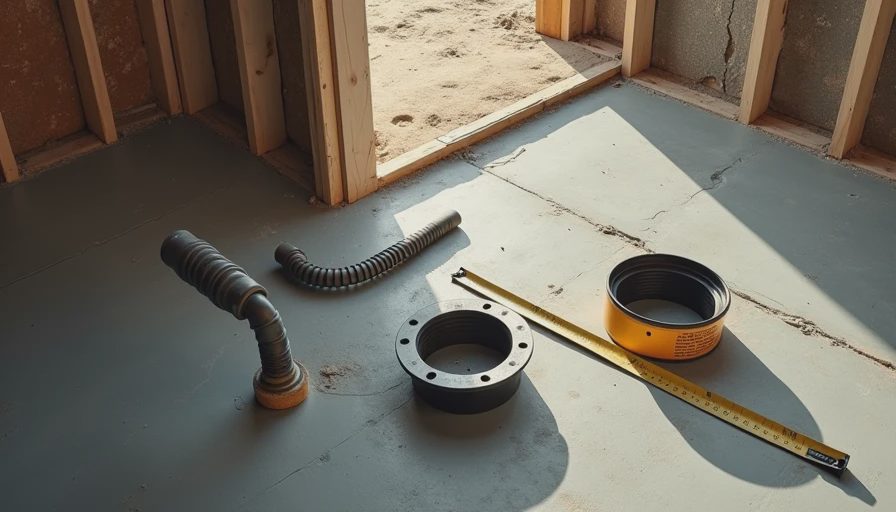
Most of the time it's because someone added a second layer of subfloor, or they laid new tile over old vinyl without ripping everything out. I saw a row house in Fishtown where a homeowner had put 3/4 inch plywood over the original subfloor, then set a flange on top of that. The flange was nearly an inch above the finished floor. No wax ring on Earth is going to save that.
If you're a DIYer and you're looking at a flange that's sitting a quarter inch or more above the finished floor, you have three options. First, you can use an extra-thick wax ring — some are rated for gaps up to an inch. Second, you can shim the toilet base with plastic shims and fill the gap with caulk. That's a band-aid. Third, and this is the one I actually recommend, you cut the flange and re-set it at the right height using a flange repair kit or a new ring. It's an extra hour, but you'll never think about it again. A bathroom built right once is a bathroom you forget about.
How to Check the Height Before You Set the Toilet
Before any wax touches anything, grab a straightedge and a tape measure. Lay the straightedge across the flange and measure from the subfloor to the top of the flange. Actually, measure from the finished floor — tile or vinyl — to the top of the flange. Write that number down. If it's between zero and 1/4 inch, you're golden. If it's between 1/4 and 1/2 inch, use a standard or slightly thicker wax ring and you'll be fine. If it's over 1/2 inch, you need to fix the floor or the flange before you go any further.

I've seen too many guys shove an extra-thick ring on a high flange and call it a day. That works for a while, but the toilet is sitting on the ring, not the floor. Every time someone sits down, the toilet compresses and the ring eventually gives out. Then you get a leak that runs down into the subfloor and you're replacing joists.
The Two Flange Mistakes I See Most
Story one: A relative of a friend in South Philly had a toilet that wobbled every time you sneezed. I popped the base and found the flange was 3/4 inch above the tile. The previous installer had used a funky double-wax setup that was doing nothing. I pulled the toilet, cut the old cast iron ring with a sawzall, and put in a new PVC flange at exactly 1/4 inch. Twenty minutes, $28, no more wobble. Story two is the opposite — a flange an eighth inch below the tile. That one just smelled. The fix was a spacer ring to bring it up level.
The lesson: this is not a hard trade problem. If you're asking yourself how high can a toilet flange be above the floor, the answer is always "enough that the toilet sits flush on the floor and the wax makes a full seal." That usually works out to 1/4 inch. Anything beyond a half inch is a stack of compromises.
The Short Answer
How high can a toilet flange be above the floor? Keep it at a quarter inch if you can, and don't let it exceed a half inch with a standard wax ring. If it's higher, fix the floor or the flange first.
If you're mid-remodel and you got this far, just buy a flange repair kit, set the ring at the right height, and put the toilet on. Any finished carpenter can do it in an afternoon. A toilet that doesn't rock is a toilet you forget about. That's the point.


No notes yet — be the first to inscribe one.