Bathroom flooring gets treated like a color decision. Gray or beige? Big tile or little tile? That is backwards. The first question is whether the floor can handle water, movement, wet feet, toilet leaks, and the occasional dropped shampoo bottle. Good bathroom flooring is less about showroom fashion and more about what is underneath it, how it is installed, and whether you can live with the maintenance.
I have torn out plenty of expensive bathrooms where the tile itself was fine. The failure was usually a soft subfloor, missing waterproofing, bad adhesive, or grout joints that were doing work they were never designed to do. Here is how I would spend the money in an older American house, especially one built before 1980.
Start with the subfloor, not the samples
Before choosing bathroom flooring, pull the toilet and inspect the floor around the flange. In a 1920s row house, you might find plank boards, old plywood, patching compound, and three generations of linoleum. None of that is a proper tile base by itself. The floor must be solid, reasonably flat, and free from bounce. A tile installation does not forgive movement the way sheet vinyl can.
For ceramic or porcelain, I typically want a sound plywood or plank structure with an approved cement backer board or an uncoupling membrane above it. Products such as Schluter-DITRA or Custom Building Products’ RedGard fabric system can help manage minor movement when installed according to their instructions. They do not rescue rotten wood. If a screwdriver sinks into the subfloor, stop shopping for tile and replace the damaged section first.
Check the height, too. Adding three-quarter-inch plywood, thinset, backer board, and tile can raise the floor close to an inch. That affects the toilet flange, door swing, baseboard, and transition into the hallway. A cheap transition strip is not a solution to a badly planned height difference.
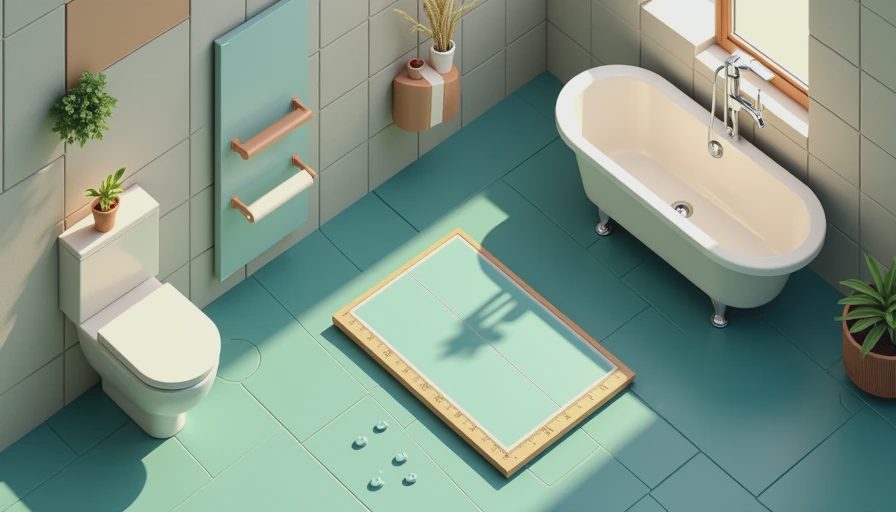
The materials that actually make sense
Porcelain is my default bathroom flooring recommendation for most homeowners. It is dense, available in practical matte finishes, and comes in convincing stone and wood looks. A 12-by-24-inch porcelain tile can make a small room look less chopped up, but large tile needs a flatter floor and a careful installer. I would rather see an 8-by-8-inch tile installed correctly than oversized tile rocking on a wavy subfloor.
Ceramic tile costs less and works well on a bathroom floor when it is rated for floor use. Do not grab a glossy wall tile because the color is perfect. Wet gloss is a skating rink. Look for a textured or matte surface with a sensible slip rating, and remember that aggressive texture collects dirt around the toilet.
Luxury vinyl plank and luxury vinyl tile are reasonable choices in a half bath or a full bath outside the shower area. Brands such as COREtec and Lifeproof offer floating systems that go down faster than tile. The weak point is the perimeter and the seams. Water can get below a floating floor through a toilet leak or an unsealed tub edge, where it can sit unnoticed. I would not use click-lock flooring as the primary waterproofing for a shower room.
Natural stone looks handsome but asks more from the owner. Marble can stain, etch, and become slippery. Slate needs sealing and has uneven cleft surfaces that are hard to clean. If you want the appearance without that maintenance, a good porcelain imitation is usually the smarter bathroom flooring purchase.
What I would choose for different bathrooms
For a busy family bathroom, I would choose matte porcelain in a medium tone with grout close to the tile color. White grout on a kids’ floor is a part-time cleaning job. A 2-by-2-inch mosaic gives you more grout lines and more traction, which is useful near a tub, though it increases cleaning time.
For a small powder room, sheet vinyl can be a practical, inexpensive answer. A competent installer can run it with very few seams, and the floor is comfortable under bare feet. It is not glamorous, but neither is replacing swollen particleboard under a toilet. In a rental or a quick resale renovation, that tradeoff often makes financial sense.
For a primary bath, porcelain over a properly prepared underlayment gives the best balance of durability and appearance. If the room is cold, consider electric floor warming under tile. A small system can add roughly $500 to $1,200 installed, depending on the room and electrical work. It is comfort, not a substitute for a furnace, but stepping onto warm tile at 6 a.m. is one upgrade people rarely regret.
When comparing bathroom flooring quotes, ask whether demolition, disposal, floor flattening, underlayment, toilet removal, and reinstalling the baseboards are included. A quote that looks $800 cheaper can become expensive once those line items appear as change orders.
Installation details that prevent expensive repairs
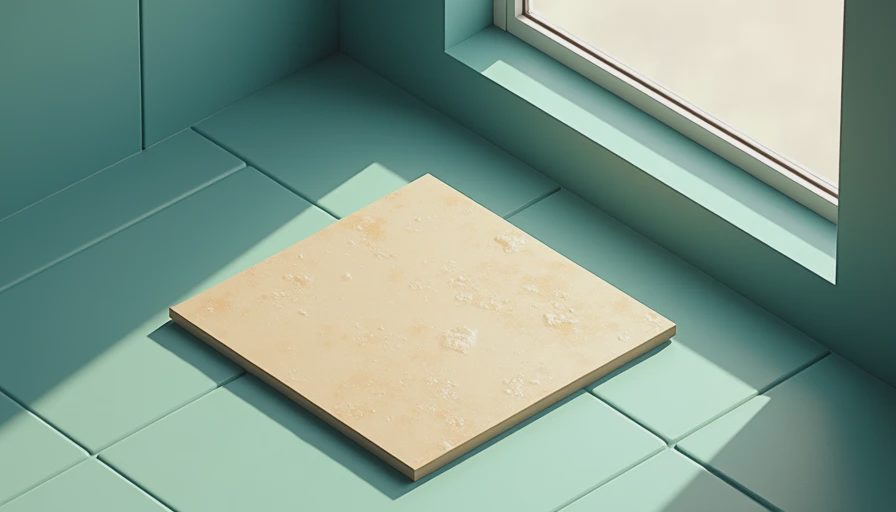
Good bathroom flooring starts with layout. Dry-lay the first few rows and avoid leaving a skinny sliver beside the tub or wall. A half-tile at both sides usually looks intentional; a one-inch strip looks like the installer ran out of patience. Mark the centerline, account for the most visible wall, and plan around the toilet so the cut is not staring at you from the doorway.
Use the correct mortar for the tile and substrate. Back-butter larger porcelain pieces so the back has proper coverage, and lift a tile occasionally to check it. A floor tile with hollow spots is more likely to crack when a heavy cabinet or cast-iron radiator bears down on it. Keep joints consistent with spacers instead of trusting your eye after a long day.
The toilet flange deserves special attention. It should sit at the correct finished-floor height and be firmly secured. If the flange is buried below a new tile surface, use an approved extender or have the plumbing corrected. Do not stack random wax rings until the toilet stops rocking. That is a leak waiting for a weekend when nobody is home.
Seal changes of plane with a flexible sealant, not hard grout. That means the inside corners, tub edge, and floor-to-wall joint. Grout is not waterproofing, and caulk is not a structural repair. Those are simple distinctions, but ignoring them is how a pretty floor starts sending water into the framing.
A realistic budget and the traps to avoid
For a typical 40-square-foot bathroom, basic sheet vinyl might run $500 to $1,500 installed. Ceramic or porcelain tile commonly lands around $1,500 to $4,000 once removal, underlayment, labor, and trim are included. A severely uneven floor, damaged joists, asbestos-containing old flooring, or plumbing changes can push the total higher before the first new tile is set.
Do not buy bathroom flooring by measuring only the visible rectangle. Add about 10 percent for cuts and breakage, and more for a diagonal layout or a complicated pattern. Buy all tile from the same lot when possible. Color and size can vary slightly between production runs, and discovering that after half the room is installed is a miserable trip back to the store.
The cheapest material is not always the cheapest floor. A $2-per-square-foot tile installed over a $2,000 repair is not a bargain. On the other hand, paying designer prices for a recognizable label does not guarantee a better installation. I have seen excellent floors made from ordinary Home Depot porcelain and terrible floors made from imported stone that cost more than my first truck.
My final bathroom flooring checklist
Before signing a contract, confirm five things in writing. First, identify the existing substrate and what will be removed. Second, specify the underlayment or membrane system. Third, include the finished height and toilet-flange plan. Fourth, ask what happens at the tub, shower, and doorway transitions. Fifth, confirm who is responsible for sealing, caulking, cleanup, and reinstalling the toilet.
Bring home two or three samples and spill water on them. Walk across them in socks. Put a little dirt on the texture and wipe it off. A finish that looks like natural stone under bright showroom lights can feel rough and grimy in daily use. Also view the sample beside your vanity and wall tile, not alone under a store’s perfect lighting.
My bottom line is simple: choose bathroom flooring for the structure underneath, the water it will see, and the maintenance you will actually perform. Spend money on preparation before chasing a fancy pattern. A bathroom built right once is a bathroom you forget about. That’s the point.

No notes yet — be the first to inscribe one.