If you're shopping for an 84 bathroom vanity double sink, you're already thinking big. That's the size for a master bath where two people actually get ready at the same time in the morning. I've installed more of these than I can count, and I'll tell you straight up: some of them are worth every penny, and some are just a big box of headaches. Let me walk you through what really matters before you hand over your credit card.
A 84 bathroom vanity double sink is not a small purchase. You'll spend anywhere from $800 to $5,000 on the vanity itself, and that's before installation. The key isn't the price tag, though. It's whether the piece is built to survive decades of wet towels, spilled mouthwash, and the occasional kid jumping off the counter. I'll show you what to look for.
Why an 84 Bathroom Vanity Double Sink Makes Sense
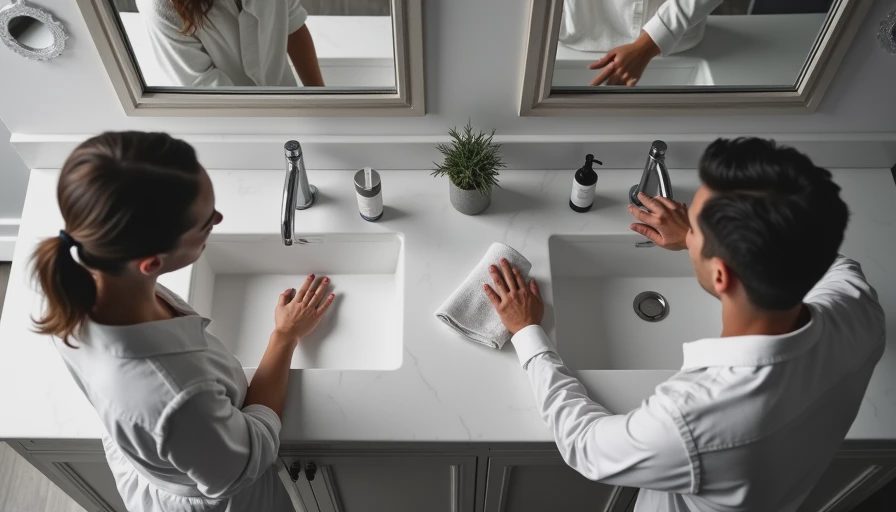
An 84-inch vanity is 7 feet wide. That's a lot of counter space. If your bathroom has the room for it, a double sink setup at this width gives each person a full 42 inches of their own space. That's enough for a medicine cabinet above, a towel bar on the side, and a little elbow room. Smaller double vanities, like 60-inchers, force you to cram two sinks into five feet, which means the sinks are tiny and the drawers are useless.
But here's the catch. You need at least 3 feet of open floor space in front of the vanity, and you need to be able to open two drawers at the same time without hitting the toilet or the tub. If your bath is 8 feet wide, an 84-inch vanity leaves only 1 foot on either side. That's tight. I've seen plenty of homeowners rip out an 84-inch vanity because they couldn't comfortably open the bottom drawers.
What a Good Double Vanity Costs in Reality
Let me give you real numbers. A basic 84 bathroom vanity double sink at a big-box store usually runs $600 to $1,200. That's going to be a particleboard box with laminate counters and basic sinks. I've installed them, and they work — but they don't age well. The particleboard swells if water gets behind the sink, and the laminate chips at the edge.
From a regional supply house or a stepped-up line like KraftMaid, you'll pay $1,500 to $3,000. That gets you plywood construction, dovetailed drawers, and a better look. If you go custom, with a quartz top and quality faucets, you can hit $4,000 before installation. The materials are what separate a vanity that lasts from one that starts falling apart in year five.
Keep in mind the countertop is usually sold separately. An 84-inch quartz top starts around $700 and goes up fast. Solid surface and natural stone run more. When you budget, add an extra $500 to $1,000 for the top if it's not included.
The Most Overlooked Issue: The Drawers and Sink Placement
Here's what I see homeowners get wrong. They look at the pretty faucets and the nice stone top, but they never open the drawers to check what's inside. An 84 bathroom vanity double sink should have at least three full-extension drawers somewhere. If the sink base takes up the whole center, you end up with only small, shallow drawers on the far sides. Those are good for toothbrush heads, not much else.
Look for a cabinet with a center drawer stack between the two sinks. That's a sign the manufacturer actually thought about storage. Also check whether the cabinet box is plywood or particleboard. Tap the sides. If it sounds hollow, it's probably particleboard. That stuff fails fast when it gets damp.
Another big deal: the plumbing. Two sinks means two drain assemblies and two supply lines. If your old bathroom had a single sink, the drain pipe in the wall may not be centered or big enough. Moving a drain line in a slab foundation can cost you an extra $1,500 in plumbing labor. In a pier-and-beam house, it's easier, but still not cheap. Plan for that before you fall in love with a particular vanity.

What to Actually Check Before You Buy
Do this checklist in the showroom or with the delivery box sitting in your garage. First, open every drawer and slide it a hundred times. Cheap drawer slides feel rough on day one. Look for soft-close slides — they're standard on most mid-range stuff now, but cheap imports still skip them. Second, pop the toe kick off and look at the base. It should be plywood, not MDF. MDF will crumble if it gets wet.
Third, check the sink material. If the sinks are molded in one piece with the top, that's cultured marble or acrylic. It's fine and easy to clean, but it can scratch. A drop-in porcelain sink is more durable, and an undermount sink looks cleaner. The best option for the money is a quartz top with a single-hole faucet setup. You don't need the fancy waterfall faucets — they're a pain to clean.
Finally, measure your doorway and hallway. I've shown up to install an 84-inch vanity and had to cut it in half because it wouldn't fit up the stairs. Pre-finished vanities almost always arrive in one piece. If you live in an older house with narrow stairways, you might want to order a split top or a convertible base that comes in sections.
Can You Install It Yourself?
A competent DIYer can install an 84 bathroom vanity double sink. It's not rocket science. But the plumbing is where things go sideways. I once replaced a vanity and found the old drain was a 2-inch pipe in a weird offset location. That cost the homeowner an extra day and a plumber's visit. If you're comfortable plumbing a double sink and you have the right tools, go for it. If not, budget $500 to $1,000 for a plumber to hook up the supply and drain lines.
The countertop installation is another thing. An 84-inch quartz top weighs over 200 pounds. Two people can do it, but if you don't get it level, the sinks will pool water. Use shims, a long level, and good sealant. Watch the seems if you have a seam in the top — get it sealed properly or you're inviting water damage.
The Part Nobody Talks About: The Vanity Back Panel
When you install a new vanity against a wall, you need access to the wall plumbing. Most vanities come with a thin back panel that's easy to cut or remove. Some cheap ones have no access panel at all, so you have to crawl underneath. I prefer a vanity with a removable toe-kick panel in front, so you can work on the drains without dismantling the whole setup.
Also, check the back of the cabinet for the plumbing cutout. The holes should be pre-drilled or marked. If not, you'll be cutting through the plywood with a jigsaw, and that's never as clean as it looks in a DIY video. Spend an extra half hour in the store measuring that.
Is an 84 Bathroom Vanity Double Sink Right for You?
Here's my bottom line. If your bathroom is at least 8 feet wide and you have the budget for a properly built cabinet — not the $599 special — then an 84 bathroom vanity double sink is the right call. It makes mornings easier for two people, and it adds real value to your house. I've never had a client say they wish they'd bought a smaller vanity.
But if you're trying to squeeze it into a smaller room, or you're tempted to save $1,000 on a particleboard box, you're going to hate it in five years. Spend the money on a quality unit, hire good help for the plumbing, and you'll never think about it again. A bathroom built right once is a bathroom you forget about. That's the point.


No notes yet — be the first to inscribe one.