
If you're standing in a Home Depot aisle wondering should you match shower tile to floor, you're asking the right question before spending real money. Tile is not paint. Once it is set, grouted, and sealed, changing your mind means demolition, dust, and a check that can easily reach several thousand dollars. My short answer is no, the shower tile does not have to match the bathroom floor. It has to work with it.
Matching can look clean and intentional, but a bathroom with identical tile everywhere can also look like a commercial locker room. The better decision comes down to scale, texture, color, slip resistance, and how much visual separation the room needs.
Matching tile is a safe choice, not a rule
When homeowners ask should you match shower tile to floor, they are usually worried about making a mistake. Using the same porcelain on the shower walls and bathroom floor is hard to ruin if the tile is suitable for both locations. A warm gray 12-by-24-inch porcelain on the walls paired with the same color in a smaller 2-inch hex on the floor can look coordinated without looking copied and pasted.
That size change matters. Large wall tile keeps grout joints to a minimum, while smaller floor tile gives your feet more grout lines for traction. The result is one color family with two practical surfaces. Many manufacturers sell coordinating collections, including lines from Daltile, American Olean, Marazzi, and MSI. You do not need to buy every piece in the collection, though. The trim, mosaic, and bullnose often cost more than ordinary field tile without performing any better.
One warning: never put a polished wall tile on the shower floor just because it matches. A shower floor needs a surface rated for wet areas, and small mosaics are usually easier to pitch toward the drain. A pretty 24-inch slab with a slick finish is a bad floor, no matter how good it looks in a showroom.

When different tile looks better
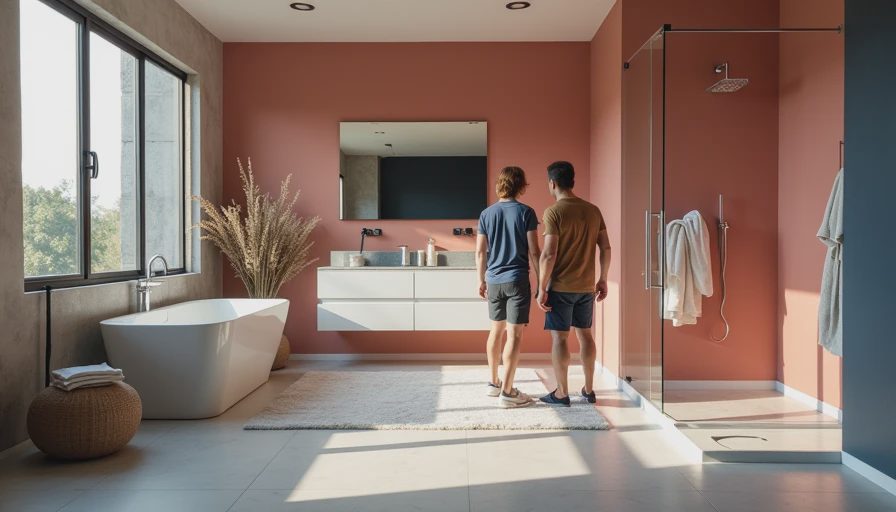
Should you match shower tile to floor if the room is small? Usually, I prefer some contrast. In a compact 5-by-8-foot bathroom, matching everything can make the walls, floor, and shower pan blur into one gray box. A darker floor beneath lighter shower walls gives the eye a clear base and makes the room feel more grounded.
Contrast does not mean black versus white. Try a cream wall tile with a muted sage or taupe floor, or a soft white subway tile with a warm terrazzo-look porcelain. Keep the undertone consistent. Beige walls with a blue-gray floor often look accidental because the colors are fighting rather than coordinating. Take samples home and view them under the bathroom's actual bulbs; a tile that looks neutral under a showroom's bright LEDs can turn pink, green, or cold gray in a 1920s house.
Different tile also lets each surface do its job. Use a textured 2-by-2-inch mosaic on the shower floor, a simple 3-by-12-inch ceramic on the walls, and a tougher matte porcelain outside the shower. That is not visual chaos. That is choosing materials according to where water, feet, and cleaning chemicals will hit them.
The rules I use on real jobs
Should you match shower tile to floor when the tiles are different sizes? Yes, if the relationship is deliberate. I use three practical rules before approving a combination.
First, limit the room to two or three main tile styles. A wall tile, floor tile, and small shower-floor mosaic are enough. Adding a fourth accent strip, patterned niche, decorative border, and contrasting trim usually turns a bathroom into a sample board.
Second, repeat one element. The shower-floor mosaic might share the floor's color, or the niche tile might repeat a stripe from the main floor. Repetition makes separate tiles feel related. You do not need identical material everywhere.
Third, control grout. Bright white grout with a dark tile creates a grid and demands more cleaning. A medium gray grout on a pale gray tile softens the joints and is more forgiving around a shower niche. For cement grout, follow the manufacturer's sealing instructions; epoxy grout costs more, but it resists staining and does not need the same routine sealing.
A real example from a row house job in Fishtown: the owners wanted a marble-look shower and a patterned encaustic-look floor. We used matte porcelain on the floor, plain white marble-look porcelain on the walls, and a small matching mosaic in the niche. The room had personality without looking like five different bathrooms colliding.
Color, format, and grout matter more than matching
The question should you match shower tile to floor is less important than whether the materials share a visual connection. Color is the easiest connection, but format and finish count too. A matte charcoal floor can work with a glossy white wall because the finishes contrast in a controlled way. A glossy black floor is another story: it shows water spots, soap residue, and every piece of lint that walks in from the hallway.
Large-format tile can reduce grout maintenance on walls, but it creates installation demands. Walls need to be flat, and old plaster or framing in older homes rarely is. If a wall bows more than the tile can tolerate, the joints will wander or the tile may rock. A competent installer may need to flatten the surface before setting tile, adding perhaps $300 to $800 in labor and materials depending on the room.
On the floor, look for a matte or textured surface and confirm the product is intended for wet floors. Do not rely only on a marketing phrase such as spa finish. Ask the tile seller for the technical data sheet. The shower pan also needs correct waterproofing and slope, generally directing water to the drain rather than leaving puddles around the curb.
A practical shopping plan
Before deciding should you match shower tile to floor, buy or borrow physical samples. Get one wall tile, one floor tile, the planned grout colors, and a trim sample. Lay them together on the bathroom floor and look at them in the morning, afternoon, and under the lights you will actually install.
Then make a simple layout drawing. Mark the drain, curb, niche, vanity, and door. A tile that looks excellent on a sample can create awkward slivers beside a jamb or leave a tiny cut at the curb. Moving the layout by half a tile can improve the whole room without changing the product budget.
Price the complete system, not just the box of tile. Include thinset, waterproofing, backer board, grout, movement joints, trim, drain hardware, and delivery. Basic porcelain might run $3 to $8 per square foot, while specialty mosaics and natural stone can exceed $15. Installation often costs more than tile itself, especially when demolition, framing repairs, and waterproofing are involved.
If you are replacing a shower, do not let a designer talk you into a material your installer cannot properly waterproof or cut. Ask who is responsible for the substrate, corners, pipe penetrations, and flood testing. Tile is the wear surface; the waterproofing behind it is what keeps your ceiling below dry.
My bottom line
So, should you match shower tile to floor? Match the room's overall direction, not necessarily every tile. Use the same tile when you want a calm, simple bathroom and the product works safely on each surface. Choose coordinated but different tile when you want better contrast, traction, or a less showroom-perfect look.
My favorite dependable combination is a large matte porcelain on the main floor, a smaller mosaic from the same color family in the shower, and a wall tile that repeats one undertone without copying the pattern. It is easier to clean, easier to lay out, and less likely to look dated when the current trend moves on.
Spend your attention on flat walls, proper waterproofing, sound grout joints, and a floor that does not turn into a skating rink. Those details matter more than whether every box carries the same product name. A bathroom built right once is a bathroom you forget about. That's the point.

No notes yet — be the first to inscribe one.