
If you're wondering how do you remove tile paint, start with a plastic scraper on a small, wet test patch. Loose latex paint may peel away; a hard, cured tile coating usually needs a paint remover labeled for the coating and the surface underneath. Work gently, keep chemicals out of the drain, and don't start sanding an old coating until you know whether it contains lead.
The important distinction is what the paint is sitting on. Glazed ceramic and porcelain can often survive careful stripping. Natural stone, unglazed tile, damaged glaze, and painted grout are much less forgiving. And if the paint is actually a professionally applied tub-and-tile refinishing coating, getting back to a clean original surface may be a bigger job than the weekend project you had in mind.
Identify the surface and coating first
Pick an inconspicuous spot, preferably outside the direct spray of the shower. Clean it with mild dish soap and water, rinse, and let it dry. Try lifting an edge of the coating with a plastic scraper held at a shallow angle. If it comes up in soft flakes or sheets, you have a useful starting point. If it barely scratches, don't assume more force is the answer.
Look at the exposed tile. A smooth, glassy finish suggests glazed tile; a porous or textured surface may be unglazed tile or natural stone. If you're unsure, avoid chemical stripping until you identify it. Acidic or strongly alkaline products can damage some stone, and porous surfaces can absorb both paint and stripper.
In a pre-1978 home, treat old paint as potentially lead-containing unless a qualified professional determines otherwise. That includes an older layer underneath a newer one. Don't dry-sand, grind, or use a heat gun on suspect paint. Contact a certified lead professional or your local health department about testing and safe removal before disturbing it further. The age of the tile alone doesn't tell you when every coating was applied.
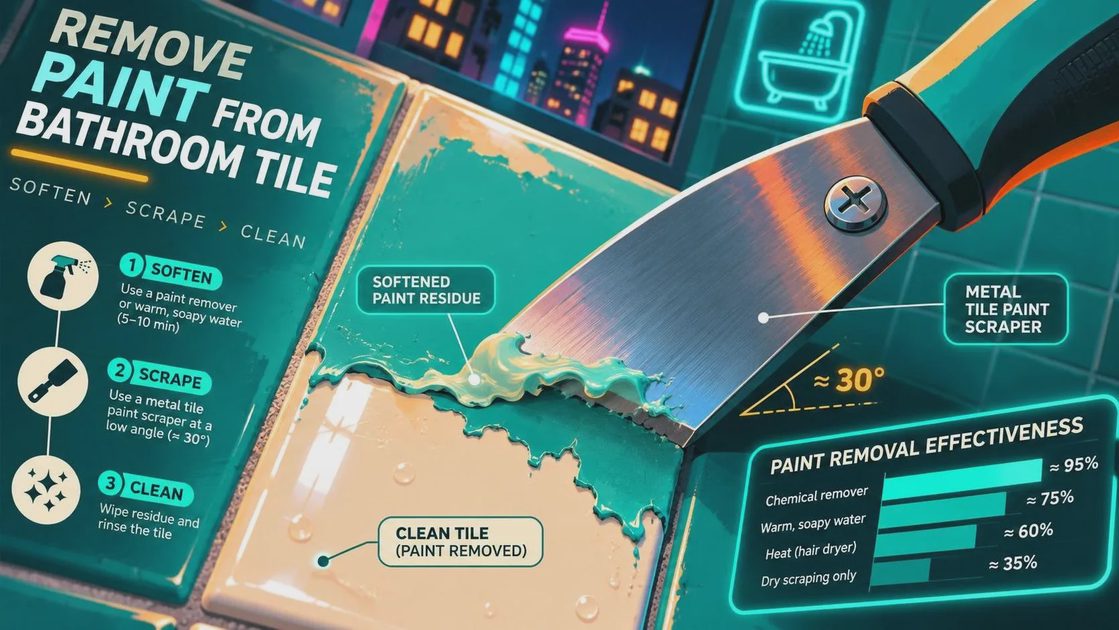
How do you remove tile paint that is already loose?
For sound glazed tile with a newer coating that isn't a lead concern, start with the least aggressive approach. Soften the area with warm, soapy water, then work a plastic scraper under a lifted edge. Keep the scraper nearly flat and use short strokes. A nylon scrub pad can help with residue, but test it first: even a nonmetal pad can dull a delicate finish.
Don't dig at grout joints. Grout is softer than the tile face, and a scraper can gouge it or pull out already-cracked material. If paint is bonded firmly to the grout, you may need to accept some discoloration or have the grout repaired after the paint is gone. Don't assume a stripper that's safe for tile glaze is safe for colored grout or silicone caulk.
A metal razor scraper can scratch tile or chip a damaged glaze, especially at corners and edges. I'd leave it in the toolbox unless you've confirmed the surface can tolerate it and the tool is appropriate for the job. Plastic takes longer, but a permanent gouge takes longer still.
Using a paint remover on stubborn coatings
When scraping doesn't make a dent, read the remover's label before buying. Look for a product that explicitly permits use on your tile surface and is suitable for the coating you are trying to remove. A remover meant for ordinary latex paint may struggle with a cured epoxy or refinishing coating. If you don't know what's on the tile, ask the coating manufacturer or a refinishing professional rather than mixing products and hoping for the best.
Test the remover in a hidden area for the full labeled contact time. Check the tile, grout, caulk, and any adjacent metal for discoloration or softening. Follow the label for application, ventilation, protective gloves, eye protection, and cleanup. A bathroom fan alone may not provide the ventilation a particular product requires; if you can't meet the label's directions, don't use it in that room.
Work in small sections so the softened coating doesn't dry back onto the surface. Lift residue with a plastic scraper and collect it in a suitable disposable container. Don't rinse stripper or paint sludge down the shower drain. Follow the product label and local disposal rules; your local waste authority can tell you where the residue belongs.

Keep the room off-limits to children and pets while you work, and avoid flames or sparks if the label warns about flammability. Never mix removers with bleach, acids, ammonia, or other cleaners. Once the product has been removed as directed, wash and rinse the area according to its instructions, then let it dry before judging the result.
What to do when the paint won't come off cleanly
A stubborn coating doesn't mean you should reach for a grinder. Abrasive wheels can destroy glaze, chew up grout, and create dust you don't want in a small bathroom. A heat gun isn't my shortcut either: heat can damage surrounding materials and is especially inappropriate when lead is a possibility.
If the tile was professionally refinished, ask a refinishing contractor whether the coating can be stripped without damaging the substrate. Get a price for stripping and another for replacement. The original tile may already have been etched or damaged during preparation, so removing the coating won't necessarily reveal a pristine surface.
Replacement becomes more attractive when several tiles are loose, cracked, or letting water into the wall. Paint is not waterproofing, and stripping it won't repair a failed shower assembly. Don't pull out individual shower tiles indiscriminately: damaging the waterproofing behind them can turn a cosmetic repair into a leak. A tile professional can assess the wall and recommend a repair or rebuild.
Check the shower before putting it back into service
After cleanup, inspect the grout and the flexible caulk at corners and where the tile meets the tub or shower base. If a stripper has softened or damaged the caulk, remove and replace it with a bathroom-appropriate sealant, following its cure time before using the shower. Missing grout should be repaired with a compatible product; it isn't a substitute for intact waterproofing behind the tile.
Bottom line: start gentle, verify what you're removing, and stop before a paint problem becomes a damaged-tile or leaking-shower problem.


No notes yet — be the first to inscribe one.