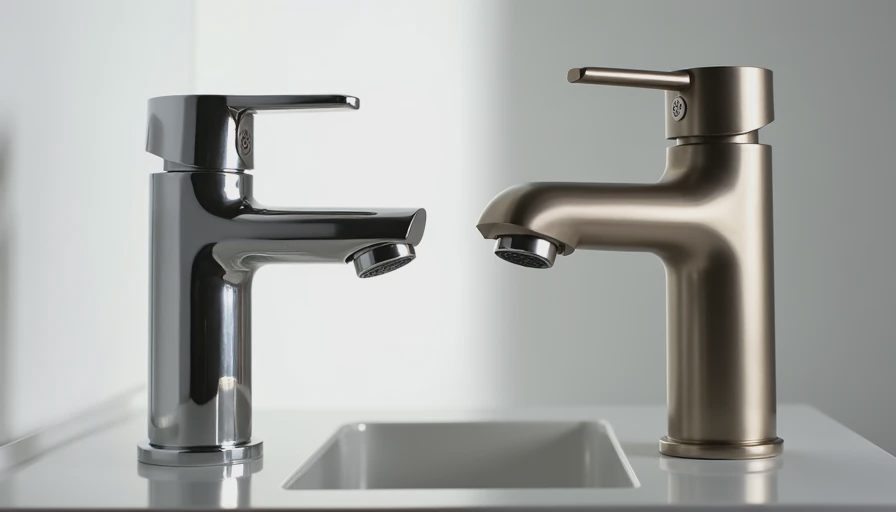
The Eternal Question
Clients constantly ask me whether they should spend $200 or $500 (or more) on a bathroom faucet. The price difference feels huge when you’re already over budget.
I’ve installed hundreds of faucets across all price ranges. Here’s the honest breakdown.
A bathroom built right once is a bathroom you forget about. That’s the point. Your faucet should be one of those invisible, reliable parts.
Side-by-Side Comparison
The $200 Faucet (Typical)
Brands: Glacier Bay, Pfister, Delta basic lines
Finish: Usually decent chrome or brushed nickel
Valve cartridge: Basic ceramic
Aerator: Standard
Warranty: 1–5 years (limited)
Weight: Lightweight
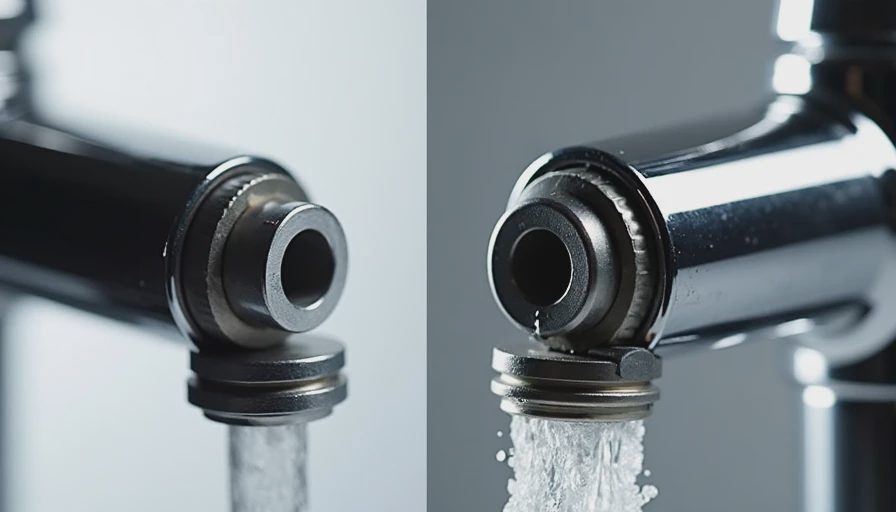
The $500 Faucet (Typical)
Brands: Delta, Moen, Kohler mid-to-upper, Hansgrohe
Finish: Higher quality plating, better color consistency
Valve cartridge: Superior ceramic or proprietary
Aerator: Better flow control, often quieter
Warranty: Lifetime (more comprehensive)
Weight: Noticeably heavier, solid feel
What You Actually Get for the Extra Money
Better Materials & Construction The $500 faucet usually has thicker brass components and better internal parts. Less plastic.
Superior Finish Higher-end models hold up better against water spots, cleaning products, and daily wear. The cheap ones start looking tired after 3–4 years.
Smoother Operation Handles feel more precise. Less dripping over time.
Better Customer Support Premium brands tend to stand behind their products more readily.
Longevity The $500 faucet is more likely to last 15–20+ years. The $200 one might need replacement at 7–10 years.
Where the Difference Is Small
Basic daily function — both will give you hot and cold water.
Style — there are good-looking options in both ranges.
My Honest Recommendation by Room
Half Bath / Guest Bath: $150–$250 is usually plenty. These get lighter use.
Primary Bathroom: $350–$550 makes sense. You use it every day.
Kids’ Bathroom: Something durable in the $300 range with good warranties.
Real-World Longevity
I’ve replaced $180 faucets that started leaking at year 6.
I’ve seen $480 Delta faucets still working perfectly after 18 years in the same house.
The gap in reliability is real.
Pro Tips When Buying
Check the weight in your hand at the store if possible.
Read recent reviews for the specific model.
Look at the warranty details carefully.
Consider the availability of replacement parts.
Buy from reputable suppliers.
Bottom Line
The jump from $80 to $200 is huge.
The jump from $200 to $500 is noticeable but smaller.
The jump from $500 to $1,000+ is mostly aesthetics and marginal gains.
For most homeowners, a solid $350–$450 faucet strikes the best balance between performance and value.
What faucet price range are you looking at for your project? Tell me the model and I’ll give you my take.



No notes yet — be the first to inscribe one.