You're looking at a 66 inch bathroom vanity and wondering if it's the right call for your reno. Good. That's the size I've installed more than any other in the last twenty years. It splits the difference between a 60-inch that feels cramped and a 72-inch that eats a small bathroom. Let me walk you through what I've learned from building out more than 400 bathrooms: what to check before you buy, which brands have earned my trust, and what you should expect to pay.
Why a 66 Inch Bathroom Vanity Makes More Sense Than You Think
A 60-inch vanity with two sinks means each sink gets less than 30 inches of counter. That's tight. Throw in a soap pump and a toothbrush holder and your elbows are arguing about territory every single morning. A 72-inch vanity gives you room to stretch, but it turns a standard 5-foot-wide bathroom into a hallway. The 66 inch bathroom vanity splits the difference. You get two 24-inch basins that are actually usable, plus a spot for the little stuff without having to surf the counter.
The cabinet itself usually lines up with standard stud spacing. On a 66-inch cabinet, you'll find the wall studs behind the back panel at 16-inch centers, which means you can sink anchors into wood instead of drywall for the hangers. That matters more than most people think. I've pulled out enough 66-inch vanities that were barely hanging on because someone used drywall anchors that couldn't hold a picture frame, let alone a cabinet full of towels.
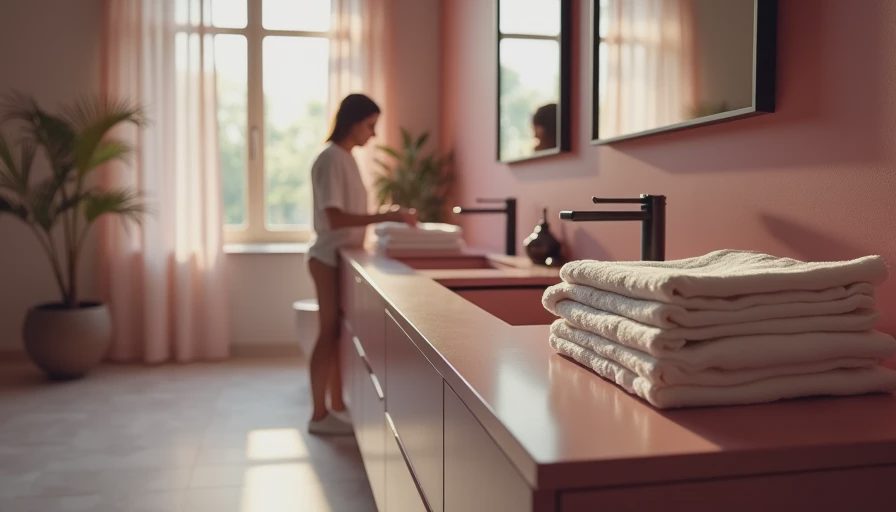
That math on storage also works out. A 66-inch unit typically comes with three or four drawers instead of the two you'd get on a 60-inch. Drawers beat shelf space in a bathroom every time, because you can reach the back without pulling everything out. Look for dovetailed drawer boxes, at least 5/8-inch plywood sides, and soft-close slides rated for 75 pounds. Those are the details that separate a vanity that lasts twenty years from one that's in the dumpster after six.
What to Check Before You Buy
Before you click "add to cart," measure the wall where it's going. This size needs about 68 inches of clear wall space to fit without scraping the trim on either side. You also need a plumbing rough-in that matches. Most 66-inch vanities have a center drain at 33 inches, but some use an offset drain to make the drawers work behind the sink. If your rough-in is at 28 inches, you'll be cutting into the back panel and cursing my name.
Check the height too. Standard vanities sit 30 to 32 inches tall. If you're tall, or if you've got kids who'll fight over the faucet, consider a comfort-height model at 34 to 36 inches. That's a simple change, but it's much easier to get right at the start than to add a riser later. And whatever you do, pop the little door at the bottom of the sink cabinet. That's where you'll find the compression valve and the P-trap. If you can't reach it, or if it's blocked by a center drawer, you'll be having a plumber over to fix that in three years.
Also, look at the back panel. A cheap vanity has a wafer-thin piece of hardboard that soaks up water and swells. A real one has a plywood back panel that's sealed or painted. Run your hand along it. If it feels rough, that's a sign you're buying furniture-grade garbage.
The Brands I'd Trust
I've installed more vanities than I can count, and there are a few names I'm genuinely happy to see on the box. Kohler makes a solid mid-priced line; their vanity tops are nearly indestructible, and their faucet hardware rarely gives you problems. American Standard is another one that doesn't try to be fancy, but its cabinets have held up in some of the dampest basements in Philly. Delta isn't a cabinet brand, but their faucets are the ones I'd put on any 66 inch bathroom vanity, especially if you want a touchless option that doesn't leak at the handle.
On the big-box side, the Home Decorators Collection at Home Depot has surprised me. Their 66-inch double-sink vanity in a dark espresso finish, around $700, has been one of the better values I've installed for rental flips. It's not heirloom quality, but it beats paying $2,000 for a name-brand cabinet that's only marginally better. Wayfair has a bunch of third-party sellers, so quality is a crapshoot. If you buy there, look for units with at least 50 reviews and photos from actual buyers. You'd be amazed how many "oak" vanities show up in plywood and laminate.
What a 66 Inch Bathroom Vanity Actually Costs
You can buy a 66 inch bathroom vanity for $350, and you'll regret it when the doors fall off. For a quality unit that you'll keep for a decade, budget $600 to $1,200 for the cabinet alone. The top, faucets, and sink will add another $400 to $800. If you're hiring a plumber and a tile guy to finish the walls behind it, that's another $500 to $1,000 in labor.
Here's a number I use a lot: plan on $2,000 total for a solid 66-inch vanity installation, assuming you're not moving the plumbing. If you're cutting into the wall to relocate drains, add $300 to $600. Plumbers in my area charge $80 to $120 an hour, and a relocating drain plus supply lines takes about three hours. That's a good reality check when you see a $1,500 vanity online and think you can do the rest for cheap.
The Bottom Line
A 66 inch bathroom vanity is the right size for most master bathrooms. It gives you the space of a 72 without eating the floor plan. Buy a unit with plywood drawers and a decent finish, spend the extra for better faucets, and get the plumbing rough-in checked before you commit. A bathroom built right once is a bathroom you forget about. That's the point.



No notes yet — be the first to inscribe one.