
A shower niche shelf looks like a small detail, but it has to survive more water, soap, shampoo, and cleaning chemicals than almost anything else in the bathroom. Choose the wrong material or install it flat, and you have a moldy ledge or cracked grout waiting to happen. I have repaired plenty of them. The good news is that a shower niche shelf built with the right slope, waterproofing, and edge treatment is simple and durable.
Start with the right material
For most tiled showers, I prefer a solid shelf made from quartz, granite, porcelain slab, or a purpose-built stone sill. A piece of 3/4-inch quartz is my usual choice when the homeowner wants a clean look without fussing over grout joints. It is dense, easy to wipe down, and available from most countertop fabricators. A leftover piece from a kitchen job can cost $30 to $75, while a custom cut may run $75 to $150.
Avoid using a loose piece of ordinary ceramic wall tile as the main shelf unless the design specifically calls for it. Thin tile can chip at the front edge, and the grout line underneath becomes a place for standing water. Marble looks sharp, but some varieties stain, etch, or show orange shampoo residue. The material is not automatically bad; it simply demands more cleaning and sealing than quartz or porcelain.
A prefab niche can also work. Schluter, Wedi, and KBRS make niche systems with matching waterproof components. They save time because the box is already formed, but the finished shelf still needs a slight pitch toward the shower. Factory-made does not mean gravity stops applying.
The slope is not optional
A shower niche shelf should slope approximately 1/8 inch over its depth. That is enough to send water back into the shower instead of letting it sit against the rear corner or seep through a weak grout joint. Some installers say a level shelf is acceptable if the tile is tight. That is poor advice. Water does not care how neat the tile looks.
I set the shelf with a small wedge or tapered mortar bed before the face tile goes on. The front edge should sit slightly higher than the back, creating a visible but not dramatic pitch. If you can feel the slope when placing a bottle, it is probably too much. If a marble rolls toward the wall, it is not enough.
Do not try to create the pitch with a thick bead of caulk. Silicone is a flexible sealant, not structural support. It can close a joint, but it will not correct a shelf that was installed flat or poorly supported.
Waterproof the entire niche, not just the seams
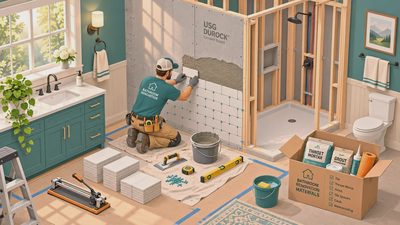
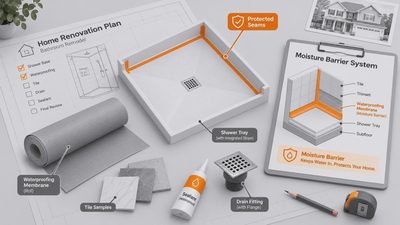
The biggest mistake I see is treating a niche as a decorative hole in the wall. It is part of the shower enclosure, so every surface needs continuous waterproofing: the back, top, bottom, sides, and corners. With a sheet membrane such as Schluter Kerdi or USG Durock, the membrane should overlap and seal according to the manufacturer's instructions. With a liquid membrane such as RedGard or Hydro Ban, apply the required coats at the proper thickness. Painting on one thin coat is not waterproofing; it is colored optimism.
The shelf itself must connect to that waterproof layer. If you install a stone slab over bare cement board and depend on thinset plus grout to keep water out, you are asking the wrong materials to do the wrong job. Cement board is not waterproof by itself. It provides a stable backing, but the system still needs a waterproof membrane.
Pay special attention to the four inside corners. Those joints move slightly as the framing and tile assembly respond to temperature and moisture. Use the approved banding, corners, or sealant for the membrane system, then allow the materials to cure before tiling.
Pick a practical size and location
A shower niche shelf needs enough room to be useful without turning the wall into a storage closet. A common niche opening is around 12 by 24 inches, but the final size should account for grout joints, tile layout, studs, plumbing, and the bottles your household actually uses. A 3-inch bottle does not need a 6-inch-deep shelf, and a niche packed with products is difficult to clean.
Place the lower shelf high enough that it is comfortable to reach without bending awkwardly. In a family shower, two smaller shelves often work better than one tall cavity. Keep the niche away from the direct spray when possible. That will not eliminate water, but it reduces the constant blast that turns every shampoo bottle into a wet bar of soap.
Before cutting the wall, check for plumbing and electrical lines. In an older house, framing is often irregular, and the stud bay may contain surprises. A stud finder is not a substitute for opening a small inspection area when the layout is uncertain.

Edge details decide how it looks and lasts
The front edge of a shower niche shelf takes abuse. Bottles get dragged across it, tile tools bump it, and someone eventually drops a metal razor. I like a solid slab with a polished or factory-finished front edge because it eliminates a vulnerable line of grout. A Schluter Jolly or Rondec profile can protect a tiled edge, but choose the profile before setting tile so the thickness works with the assembly.
If you use bullnose tile, verify that the bullnose reaches far enough to cover the edge and still leaves room for a proper joint. Do not stack random trim pieces to hide a bad cut. That is how a $100 design detail starts looking like a repair made at 6 p.m. on a Friday.
Use a color-matched 100% silicone sealant where the shelf meets the side and back tile, following the membrane and tile manufacturer's guidance. Grout belongs in tile joints; flexible sealant belongs at changes of plane. Those are different jobs.
What a shower niche shelf should cost
For a new shower, the incremental material cost for a basic tiled niche can be roughly $150 to $400, depending on the membrane system, trim, slab, and tile. A custom stone shelf may add $75 to $200. Labor is the larger variable. A tile setter may spend four to eight hours laying out, framing, waterproofing, cutting, and finishing the niche, which can add $300 to $900 in a normal remodel market.
A retrofit is different. Cutting into a finished shower means removing tile, exposing the wall, rebuilding the waterproofing, and matching the existing surface. That can easily cost $800 to $1,500, especially when replacement tile is discontinued. If you know you want a niche, plan it during demolition instead of adding it after the walls are finished.
Do not save $50 by skipping the proper membrane accessories. A failed niche can damage framing, insulation, drywall, and the room behind the shower. The repair bill will not be interested in how much the shelf originally cost.
My installation checklist
Before tile goes up, confirm that the niche is framed solidly, the cavity is clear of plumbing, and the waterproofing is continuous. Test the shelf with a small level and verify that it pitches toward the drain. Dry-fit the slab or trim to confirm that the front edge aligns with the surrounding tile. Check that bottles fit without touching the ceiling or side walls.
After installation, inspect every corner for gaps, pinholes, chipped edges, and loose trim. Let thinset, grout, and silicone cure for the time specified on their labels before using the shower. Then clean the shelf regularly. Even the best surface collects soap film when three people leave half-open bottles on it for months.
A shower niche shelf is not difficult, but it is unforgiving. Build the waterproofing first, give the surface a deliberate slope, and finish the exposed edge with a durable material. A bathroom built right once is a bathroom you forget about. That's the point.
No notes yet — be the first to inscribe one.